Profile: Colston’s Cove, Harbour Grace

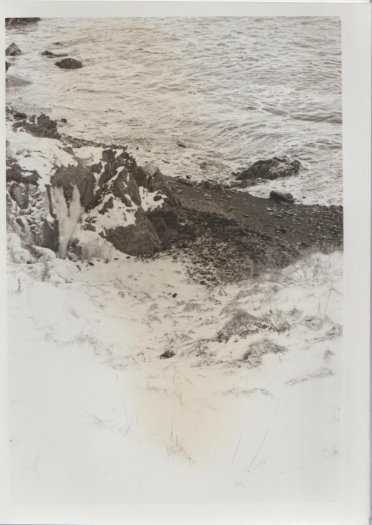
Colston's Cove / Bradbury's Cove

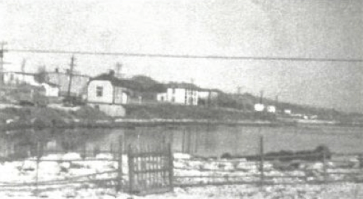
Colston’s Cove (or Bradbury’s Cove) in winter, ca. 1960.

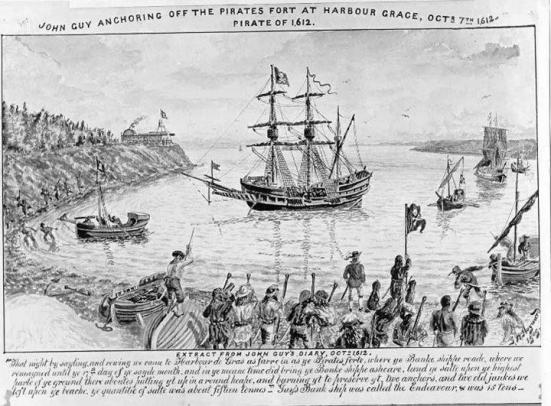
Near where Peter Easton established fortifications at Harbour Grace, John Guy landed salt on a beach. Guy called this beach Colston’s Cove, after his brother-in-law, William Colston, who maintained his plantation at Cuper’s Cove (Cupids) in summer 1611. Guy recorded this encounter in an October journal entry:

That night by sailing and rowing we came to Harbour Grace as far in as the Pirate’s Fort, where the bank ship [the Endeavour] was ready and where we remained until the 7th day of the said month [October] and in time did bring the bank ship ashore and land the salt upon the highest part of the ground and there put it in a round heap and burned it to preserve it. The old junks we left upon the beach; the quantity of salt was about fifteen tons. [Note: Excerpt edited by the author for clarity.]

Guy lands salt at Easton's fort

The Endeavor lands salt at Colston’s Cove (artist’s rendition), October 7, 1612.

After Guy, Bristol merchants established a plantation near this same site, under the auspices of Robert Hayman, author of Quodlibets, the first book of English creative writing written in the New World.

In later years, Isaac Bradbury had a fishing stage on Colston’s Cove beach, and the site became known as Bradbury’s Cove. William A. Munn recounts the history of the beach in his seminal “History of Harbour Grace” (1933-39):

We now come to where Isaac Bradbury had his fishing stage, right in front of where we now find the Methodist Church stands at the present time. This property was purchased from the Garland family. The Bradbury family had aristocratic connections in the Old Country, and have always held a high name in Harbour Grace. Bradbury’s Cove is still known by that name, although the fishing stages have vanished long ago. Tradition says that this was originally Colston’s Cove, and this name dates back to 1610 when William Colston was right hand man with our first Governor John Guy…and where the salt was landed in 1612.


— Written by Matthew Gerard McCarthy (Communications Officer) for the Conception Bay Museum, Harbour Grace.

Harbour Grace Notebook: March

journal pic

Follow the Harbour Grace Notebook series with the hashtag #hgnotebook on FacebookTwitter and Instagram

1 Mar. 1832: The striking sealers of Harbour Grace and Carbonear post their final notice: the merchants have until March 3 to settle their agreements. More info: Perseverance: The Sealers’ Strike in Harbour Grace & Carbonear, 1832.

3 Mar. 1832: Between 500-600 sealers gathered at William Innott’s pier, on Harbour Grace wharf. The magistrates, with police and specials in tow, could do little to quell the gathering. He reported to the governor that “the noise, uproar, and numbers made any attempt to stop them futile.” The sealers then paraded through the streets, halting in front of each merchant house to call out their agreement. Each merchant agreed to the terms in turn; each agreement was saluted with a cheer and the men moved on. More info: Perseverance: The Sealers’ Strike in Harbour Grace & Carbonear (1832).

4 Mar. 1878: Ernest Sheppard, ferryman and cooper, born in Harbour Grace to John Coryer Sheppard and Janet (Courage) Sheppard. He would later serve with distinction in the South African War as part of Lord Strathcona’s Horse and the South African Constabulary, a British paramilitary. More info: Artifact Profile No. 2: Portrait & Military Discharge Papers of Ernest Sheppard (1878-1955).

4 Mar. 1955: Ernest Sheppard dies at St. Clare’s Mercy Hospital, St. John’s. He is buried at St. Paul’s Anglican Cemetery, Harbour Grace, with his wife Anne Beatrice (Smith) Sheppard. More info: Artifact Profile No. 2: Portrait & Military Discharge Papers of Ernest Sheppard (1878-1955).

6 Mar. 1852: The St. John’s-Carbonear telegraph line goes into service. To celebrate the inauguration of the line, Frederick Gisborne gives a public lecture to the Mechanics’ Institute at the Old Factory, St. John’s.  Many public officials and dignitaries attend the discussion. The telegraph office is situated at the Commercial Building, Duckworth St, and connects to the system linking Harbour Grace and Brigus.

8 Mar. 1810: Charles Davis Garland, planter and judge, dies at Harbour Grace, aged 79. More info: Profile: Charles Davis Garland (1730-1810)

11 Mar. 1852: The Thursday edition of the Newfoundlander discusses the excitement surrounding the new St. John’s-Carbonear telegraph line: “The Electric Telegraph between St. John’s and Conception Bay was put into operation for the first time on last Saturday, and has transmitted several messages from Brigus and Harbour Grace each day this week. Yesterday particularly, the Telegraph Office was the scene of a general attraction throughout the day.” 

11 Mar. 1943: Lamont “Lal” Parsons, native of Harbour Grace, completes an experimental flight carrying two 250-lb bombs. Several days later he flies a bomb-equipped Hurricane on a dusk patrol to Cape Race.

Parsos

Lal Parsons flies plane carrying two 250-lb bombs, March 11, 1943. Photo courtesy Crossroads of the World (@hattiescamp).

14 Mar. 1832: The sealers and merchants of Harbour Grace and Carbonear establish peace, their (dis)agreements settled. The fleet leaves for the ice. More info: Perseverance: The Sealers’ Strike in Harbour Grace & Carbonear, 1832.

17 Mar. 1814: First feast of the newly inaugurated Benevolent Irish Society (BIS), Conception Bay Branch, the non-denominational, but largely Roman Catholic, fraternal, charitable organization, held at Harbour Grace. Dr. William Stirling, chairperson–and notably, a Protestant–presides over the occasion. At this same annual dinner in 1832, the St. John’s Evening Telegram reports, “He [Stirling] presided over a lavish dinner that began at 6 p.m. on St. Patrick’s Day and lasted until 3 a.m. the following morning. Forty members attended and there were forty-one toasts proposed–one for each member and one extra.”

17 Mar. 1864: Businessman William J. Donnelly dies at Harbour Grace. He is buried in a crypt under the former Cathedral at Harbour Grace along with his wife and three of his children. He is recognized as contributing large sums of money to build and furnish the original Cathedral, as well as a Roman Catholic chapel and school at Spaniard’s Bay. His obituary states: “His career was one of strict integrity, and he left a handsome fortune, the result of a life of steady toil and frugality.” (Note: Donnelly’s body, and the bodies of his family members, were moved in fall 2018 and interred at Harbour Grace’s Roman Catholic Cemetery on Hipsley Rd.)

20 Mar. 1879: Thomas Ridley dies in Upper Tooting, Surrey, England, aged 80. More info: Facebook.

22 Mar. 1904: Thomas Harrison Ridley dies in London, England.

23 Mar. 1823: Enrico Carfagnini born in Aversa, Italy, to Liborio Carfagnini and Ascenza Ciancarelli.

26 Mar. 1940: Sir Richard A. Squires dies in St. John’s. Born at Harbour Grace in 1880, the only child of Alexander Squires and Sidney Jane Anderson, Squires became two-time Prime Minister of Newfoundland (1919-23; 1928-1932) and possibly its most controversial political figure. More info: Facebook.

29 Mar. 1968: Old Riverhead Post Office shuts its doors; new Post Office opens. More info: Profile: Old Riverhead Post Office, 1916-1968.

30 Mar. 1853: People of Harbour Grace send a petition to the Legislature to construct a sewer on Water Street.

31 Mar. 1984: Harbour Grace Railway Station officially closes.

Profile: Old Riverhead Post Office, 1916-1968

old riverhead post office

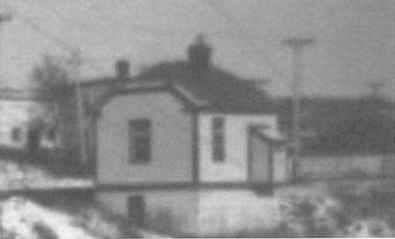
P.J. Hickey, then mailman on the train, approached Archibald W. Piccott, Minister of Marine and Fisheries and MHA for the Harbour Grace district, and told him of the hardship of the people who had to stand outside a dwelling and receive the mail through an open window. The House of Assembly was not open at the time; so Piccott asked P.J. Hickey if he could guarantee $1,000 for construction, until the legislature reopened. J. Mackey supplied the amount and the Post Office was built. Mike Mackey served as foreman, and lumber came from Gosse’s Mill, Spaniard’s Bay. The Post Office was constructed near the bottom of Station Lane (today, the Hard Path), which the postmaster/postmistress would walk up each day to meet the train, pick up the incoming mail and drop off outgoing mail.

Riverhead

Old Riverhead Post Office (left)

On May 18, 1916, opening day, Mary Coady became Riverhead’s first postmistress. After her death in 1937, Henry Coady was postmaster for eight months. Afterwards, Justin McCarthy worked there from October 1937 to August 14, 1941; Nelly (Barron) Ryan from August 15, 1941, to November 30, 1946; Marie Kelly from December 1, 1946, to 1951; and Margaret Cleary from 1951 until 1968, when the building closed.

James R. Tucker, MHA for Trinity-Conception, officially opened the new Riverhead Post Office on March 29, 1968, at 12:30 p.m. Sister Sylvia recited the Lord’s Prayer and Edward Russell–at 85, the oldest man in the community–posted the first letter. Johnny Shanahan, of Riverhead, and Betty Ann Peddle, of Tilton, cut the ribbon. Mail was delivered from the new location on March 30, 1968, by Margaret Cleary.

The Riverhead Post Office was eventually closed in the 2000s and replaced by outdoor mailboxes.

Do you have any memories or pictures of the old post offices at Riverhead? Contact us!

This post is part of the Harbour Grace Notebook series. Follow the updates on social media with the hashtag #hgnotebook.

— Information sourced from Riverhead Reunion pamphlet (2009)

Artifact Profile No. 3: Receipts from Strapp’s Pharmacy

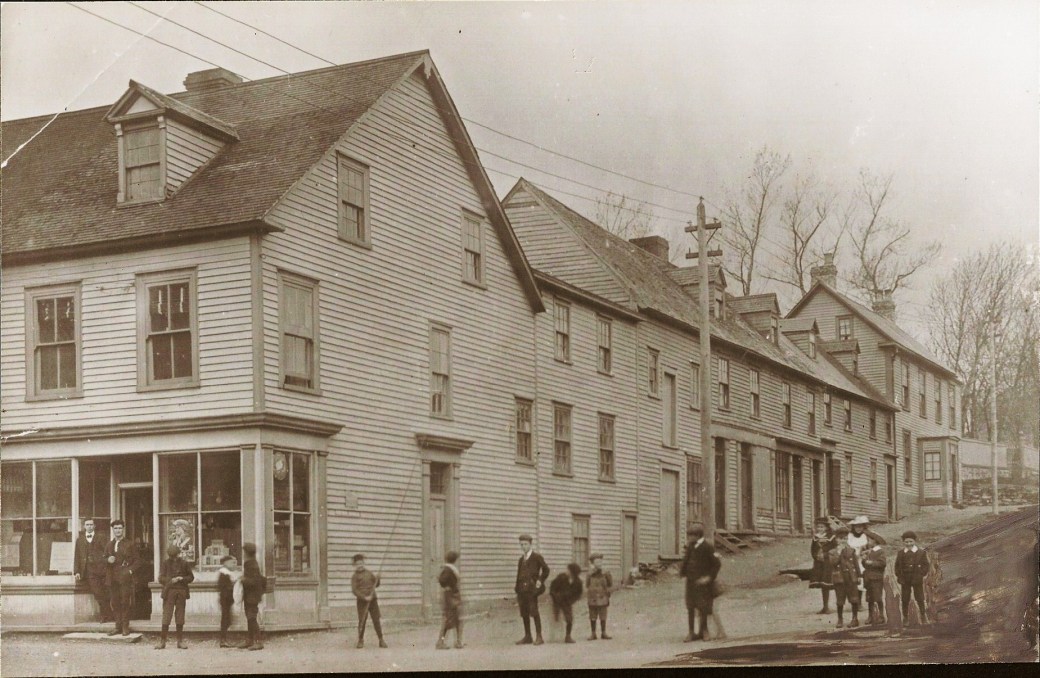
Strapp's Pharmacy, corner of Bannerman St & Water St

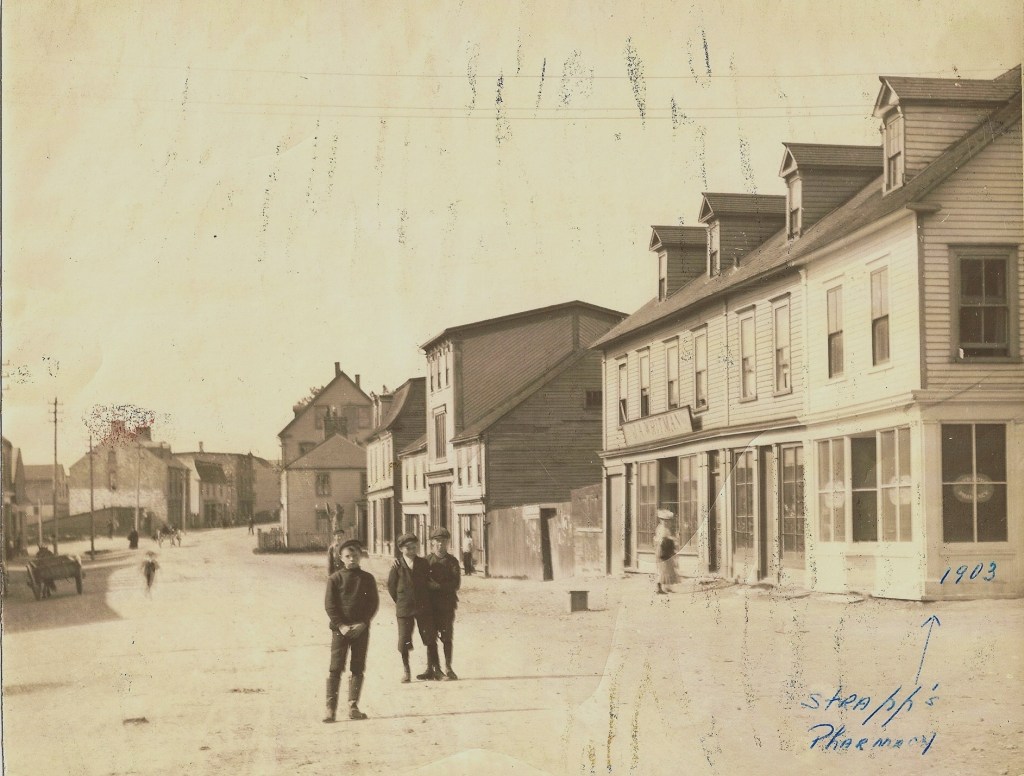
Strapp’s Pharmacy (left) opened on August 31, 1900, on the corner of Bannerman St and Water St.

Dr. Walter A. Strapp, a local physician, opened Strapp’s Pharmacy on August 31, 1900. The business was located at the corner of Bannerman St and Water St. Edward D. Freeman, 14 years old, went to work there for Strapp in 1900. Six years later, in 1906, Strapp appointed Freeman pharmacy manager. Freeman operated the drugstore for several decades thereafter, developing the business into an important point of interest and information on Water St. As Patrick Collins writes in Dr. Charles Cron (2010), his biography of the well known local doctor, Strapp was “esteemed as a wonderful physician.” He began practicing with Cron when the latter returned to Harbour Grace from McGill. Though Strapp was doing well in his later years, he fell over a steep set of stairs and was never the same after. He died on April 2, 1918.
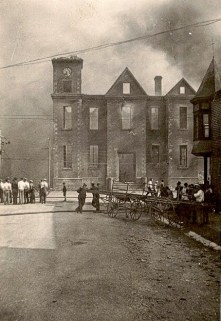
1944 fire - Government Building & Strapp's

Fire destroys the Government Building, Water St, 1944. Strapp’s Pharmacy pictured right.

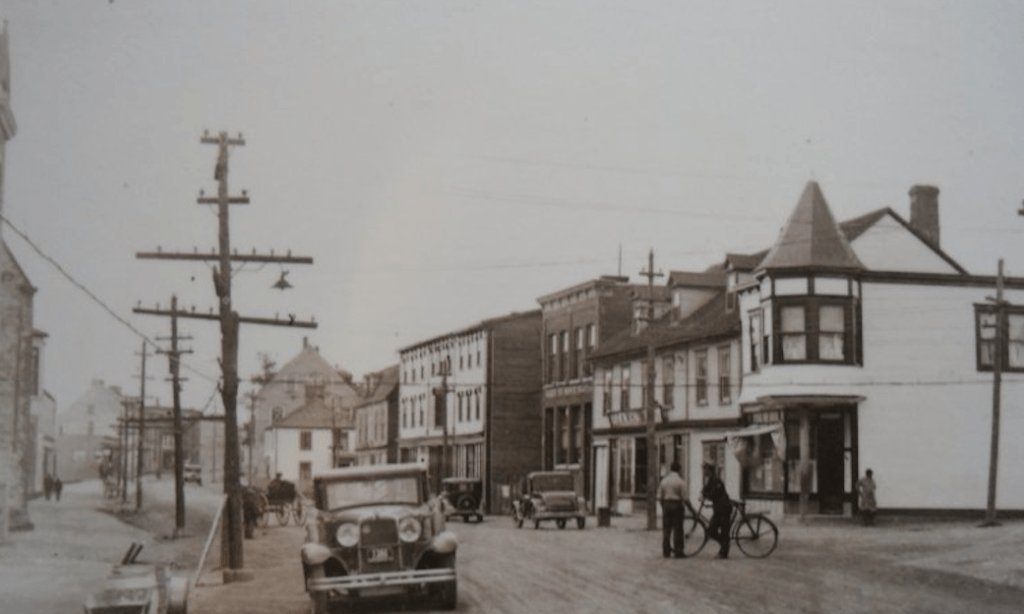
By at least 1919, a new building was constructed (or renovated) on the site of Strapp’s original pharmacy. This new building featured a turret overhanging the entrance – a prominent landmark on Water St to this day. Across the street stood the former Government Building, the brick-and-stone structure which housed the Post Office and a telegraph office. Tragically, a great fire on August 17, 1944, gutted this grand edifice, and its shell remained on Water St for over twenty years before its final demolition. Fortunately, Strapp’s Pharmacy survived the 1944 fire and continued normal operations.

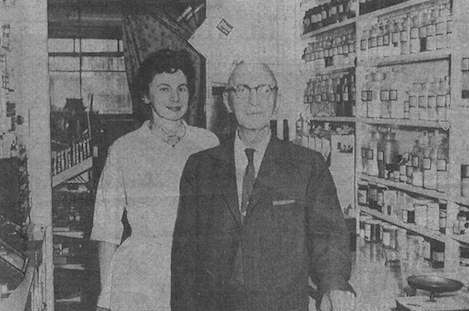
A prominent man in town, Freeman was deeply involved in community life. Notably, he served as chairman of the Harbour Grace Fire Sufferers’ Relief Committee, which raised $61,000 to help those who had homes and possessions. He was also treasurer of the Knights of Columbus, president of the Tennis Club, a member of the Harbour Grace Regatta Committee, and a former town councillor. The September 7, 1962, edition of the Daily News, a St. John’s newspaper, noted that Freeman, “although 76 years old[,]…is at his desk every day and always has time to chat with friends and visitors.” Rex Sinyard apprenticed under Freeman, later opening a pharmacy shop at the bottom of Victoria St. In the 1970s, Dr. Joseph Dunn operated Strapp’s.
Screen Shot 2019-03-21 at 1.18.32 PM

Edward D. Freeman and his daughter Kathleen, graduate pharmacist, 1962.

The Strapp’s Pharmacy building still stands on Water St, Harbour Grace. Today, it’s Easton 1602 Pub.

Receipts from Strapp’s Pharmacy

Our collection of receipts from Strapp’s Pharmacy are dated 1924, 1925, 1934 and 1935. There are 106 receipts in the collection, 103 signed for “Mr. Oscar Howell” (1934-35) and 3 signed for “Mr. Jos. [Joseph] Fitzgerald” (1924-25). As the company header indicates, by at least 1925 Strapp’s Pharmacy operated as a Rexall Store, a chain of pharmacies still in existence. As a Rexall affiliate, the pharmacy sold “drugs, toilet articles, stationery, cigars, garden seeds, rubber goods, ice cream and soda, [and] candy.” The above pictured receipt, numbered 4, is dated October 21, 1935. Though the handwriting is difficult to read, 100 aspirin, the first purchased item, cost $0.25 at Strapp’s in 1935. The customer’s total is $3.20.

These receipts were recently found stored at the Harbour Grace Railway Station (donor unknown). Look for them to be displayed in The Landing this summer, alongside our equipment from Dr. Goodwin’s dentistry.

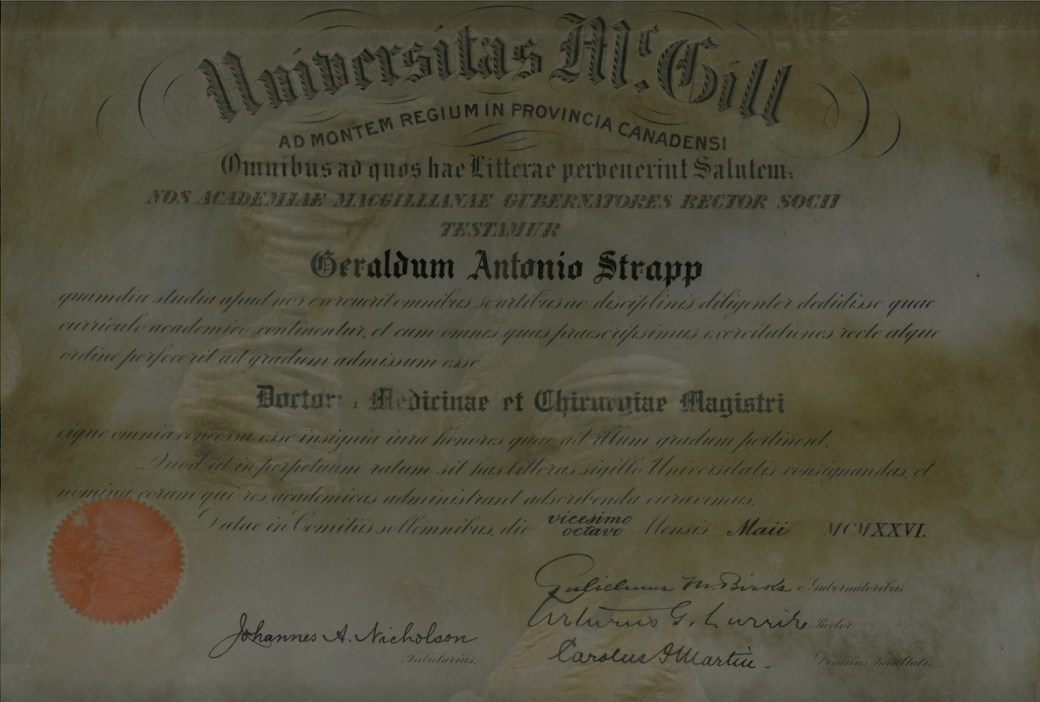
One of the later owners of Strapp’s store, Kevin Williams, converted the space into Cuff’s Pub. Williams also has a number of receipts from pharmacy. In conversations, he noted Oscar Howell as a frequent purchaser in his collection of receipts. As well, he possesses the McGill University degree of Dr. Gerald Anthony Strapp (pictured below), Walter Strapp’s son. Williams found the degree inside the old pharmacy.
Screen Shot 2019-03-22 at 6.18.21 PM

Other items and advertisements from Strapp’s can be seen below.

More importantly, do you have any memories or further information regarding Strapp’s Pharmacy at the corner of Bannerman St and Water St, Harbour Grace? Contact us!

Sources & Further Information

Collins, Patrick J. Dr. Charles Cron: A Doctor for All Time, A Man Who Cured Our Hearts. Bowmark, 2010. Print.

Connelly, R.J. “Strapp’s Pharmacy.” Story of Harbour Grace, 1980. Print.

“Harbour Grace Steeped in History.” Daily News, St. John’s, September 7, 1962. Print.


— Written by Matthew Gerard McCarthy (Communications Officer) for the Conception Bay Museum, Harbour Grace.
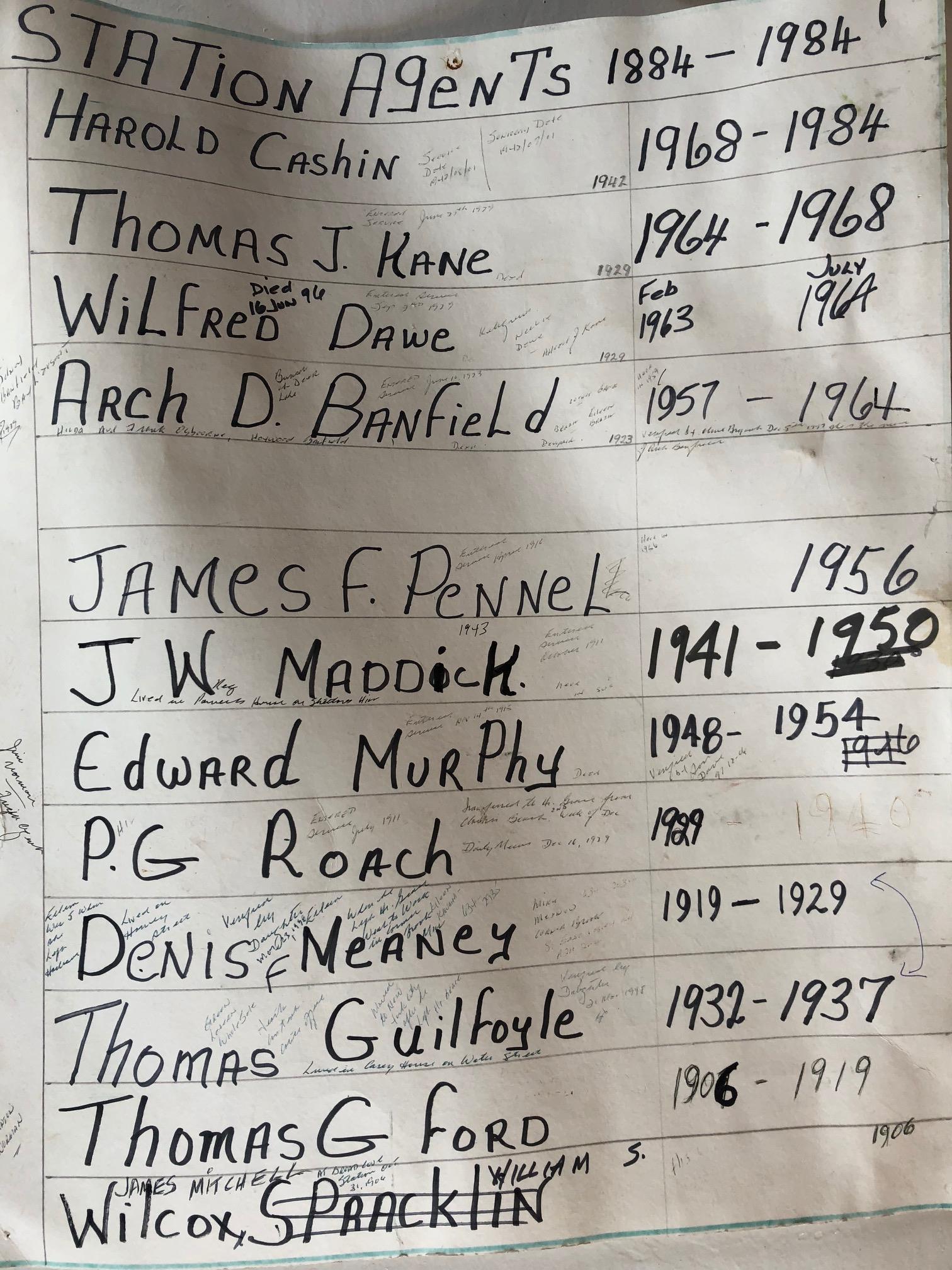
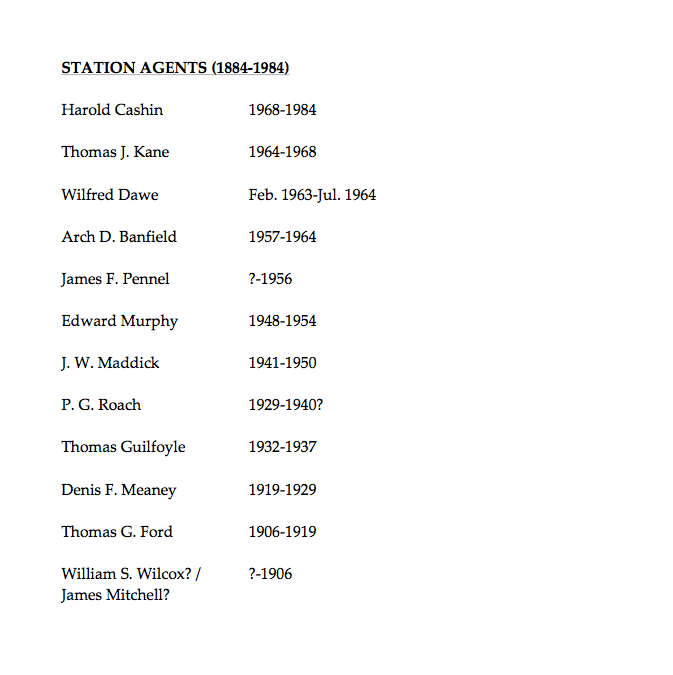
Station Agents at the Harbour Grace Railway

Do you have any information on the station agents in Harbour Grace from 1884-1984? If so, contact us! View the working document here.


Photo of the Day: Slide-hauling, ca. 1910

20091061

Pictured: Slide-hauling wood, Harbour Grace, ca. 1930. (Lady Lake or Bannerman Lake?) The two men are George James Tetford and Harold Gordon Tetford.

These slides were often called “catamarans,” which the Newfoundland English Dictionary defines as “a sled with stout wooden runners curved up in front and with a vertical stick, or ‘horn,’ at each corner, hauled in the winter by dogs, horse or man, used esp for carting wood and other heavy loads, but also for pleasure.” Also, the horse in this picture is the famous Newfoundland pony breed.

Photo courtesy Conception Bay Museum archives.

Profile: Charles Davis Garland (1730-1810)

Charles Davis Garland

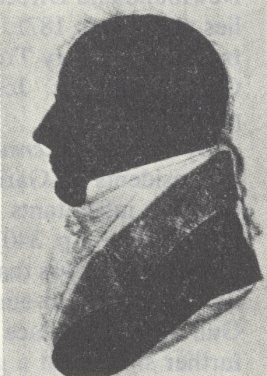
Silhouette of Charles Davis Garland

Born in 1730 in Musketta (Mosquito; later Bristol’s Hope), the son of George Garland (1677-1763), Charles Davis Garland was a planter with extensive holdings and properties in Conception Bay during the latter half of the eighteenth and the early nineteenth centuries. While he did participate in the fishery to some degree, he rented most of his holdings to migratory fishers and planters. These rental properties included several plantations in Harbour Grace and Musketta (Bristol’s Hope) and fishing rooms at Musketta and Devil’s Cove (later Job’s Cove). He also claimed haying and grazing privileges on Little Bell Island, Harbour Grace Island and Carbonear Island. Garland was also involved in the transatlantic mercantile trade and was part owner of several ships, including the Nancy, Friendship and Charlotte.

In 1755 Garland was appointed a magistrate for the Conception Bay area. One of his first acts, on behalf of Governor Richard Dorrill, was to investigate charges that Roman Catholic masses had been celebrated publicly in Conception Bay, contrary to the laws governing religious practices in Newfoundland. Garland’s preliminary investigation determined that a priest had performed mass at Caplin Cove, north of Carbonear, but that he had left and gone to Harbour Main. Garland was able to gather confessions from Michael Katem and Michael Landrican, two planter-priests, that they had celebrated the mass. Their properties were burned, and the two men were subsequently hit with heavy fines and exiled from Newfoundland.

In 1762 Garland helped organize the defence of Conception Bay against French invaders. In the same year he also marshalled a group of 50 volunteers to become part of Colonel William Amherst’s force, to help recapture St. John’s; he also provided boats and landing craft for the men. His service gained him an official commendation, with the London Chronicle reporting on his deeds. This same year he was given the added responsibility of Deputy Customs and Naval Officer.

As one of Newfoundland’s early peace officers in a developing civil service, Garland performed a varied role in a controversial office, during a precarious period in Newfoundland’s history. He served under many Naval Governors, whose views and interpretations of the act governing Newfoundland often differed. Also, British merchants and captains sometimes challenged his authority, conduct and integrity. Over most of his public career Garland tried to gain a livelihood from the fishery and trade, occupations that tended to draw him into a conflict of interest with his role as a peace officer. One such example was when Governor Sir Hugh Palliser temporarily relieved Garland of his duties in 1765, citing a dispute with a Devonshire merchant over an unpaid bill. Garland was eventually reappointed in 1766.

Local tradition in Harbour Grace maintains that in 1764-5 Garland gave some of his property in Harbour Grace to Rev. Laurence Coughlan, enabling the construction of Harbour Grace’s first Anglican church and parsonage.

Notably, Garland purchased a plantation at Harbour Grace in 1770 known as “The Grove,” near Bears Cove point, for which he paid 50 pounds to a Jersey merchant, Nicholas Fiott—the same Nicholas Fiott whom Coughlan chastised as “leading an immoral life” in May 1772. In 1805 “The Grove” contained two stages, three fish flakes, four dwellings, three vegetable plots and a meadow.

In 1799 he was appointed a surrogate judge with a yearly remuneration of £60. Rev. Lewis Anspach succeeded him as Surrogate Judge in Conception Bay in 1810.

Garland died at Harbour Grace on March 8, 1810, aged 79.

This post is part of the Harbour Grace Notebook series. Follow the updates on social media with the hashtag #hgnotebook.


Sources & Further Information

“Garland, Charles Davis.” Encyclopedia of Newfoundland and Labrador, 1981, p. 478.

Hancock, W. Gordon. “Charles Garland.” Dictionary of Canadian Biography, http://www.biographi.ca/en/bio/garland_charles_5E.html. Accessed 7 March 2019.

Profile: Cron House / Thornhill / Bellevue (1879)

Screen Shot 2019-03-07 at 12.09.25 AM

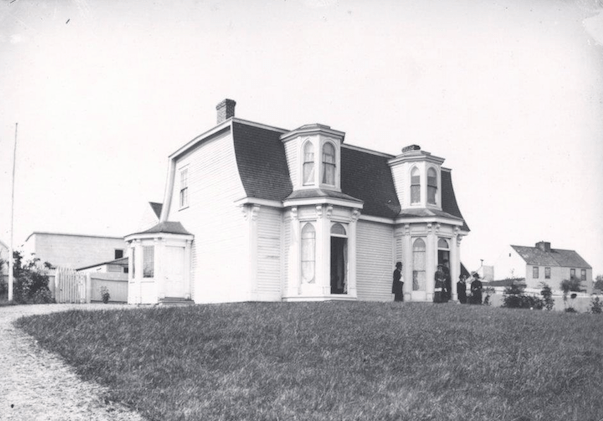
This century old house on Water St East is actually two houses. The contract for the building of the front house was let in September 1878. An agreement drawn up at the time between Thomas R. Bennett and Edward Comer, master carpenter, specified that Bennett would supply materials and Comer would be paid £85 in three instalments for his labour.

The back of the house was a preexisting structure, which craftsmanship indicates may predate the 1879 house by forty or fifty years. It was possibly moved a short distance to the present site, to be joined to the newer house.

Thomas R. Bennett (1830-1901)

Thomas R. Bennett 

A native of Windsor, Nova Scotia, Bennett moved to Fortune Bay in 1853, where he established a fishery supply business. This business proved profitable, particularly in trade with the antebellum southern United States. He eventually ran for politics, serving as MHA for Fortune Bay from 1865-74 and as Speaker of the House of Assembly from 1869-73. He was appointed to the bench in 1873, holding the post of Judge of the Northern District Court at the time he built his home in Harbour Grace. He served as magistrate for 25 years, from 1873-98. He died in Harbour Grace on August 13, 1901.
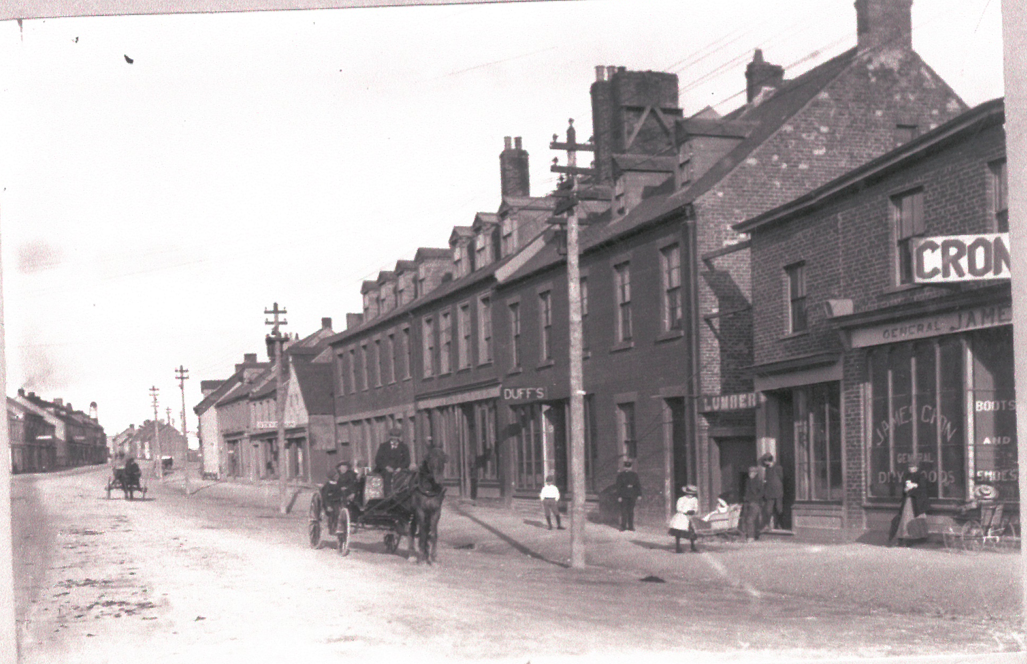
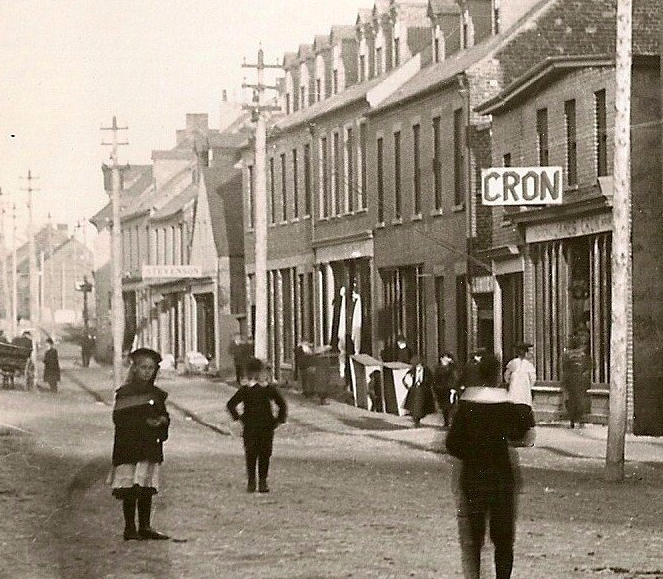
James Cron's draper shop (left)

Cron’s draper shop (left); old Post Office (far right)

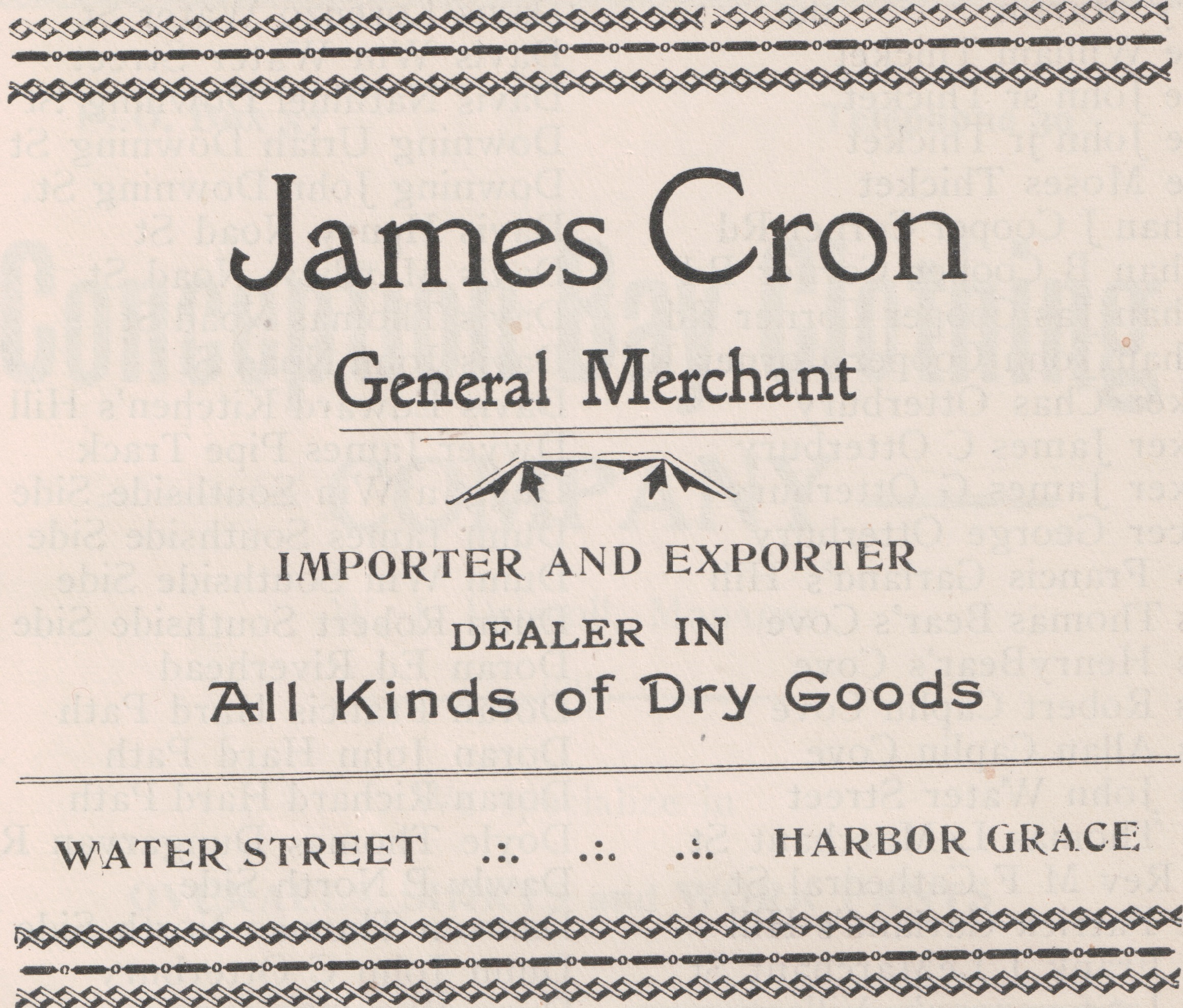
In 1902 Bennett’s widow sold the unit to James Maxwell Cron, a prominent Harbour Grace merchant; Cron owned a draper’s shop on Water Street and raised his ten children at the house, which became known as Thornhill, after Cron’s hometown in Scotland, and, later, as Bellevue. (Coincidentally, Bennett’s mother-in-law’s maiden name was Thornhill, too.) Notably, Thornhill was the childhood home of Dr. Charles Cron–a son from James Cron’s first marriage to Frances Katherine Ross–the McGill-educated, well respected local doctor.

James Cron occupied the house until his death in 1935. He willed the property to Frederick Robert Cron, a son from his second marriage to Emma Martin. Robert raised his family at Thornhill, living there until his death in 1972.

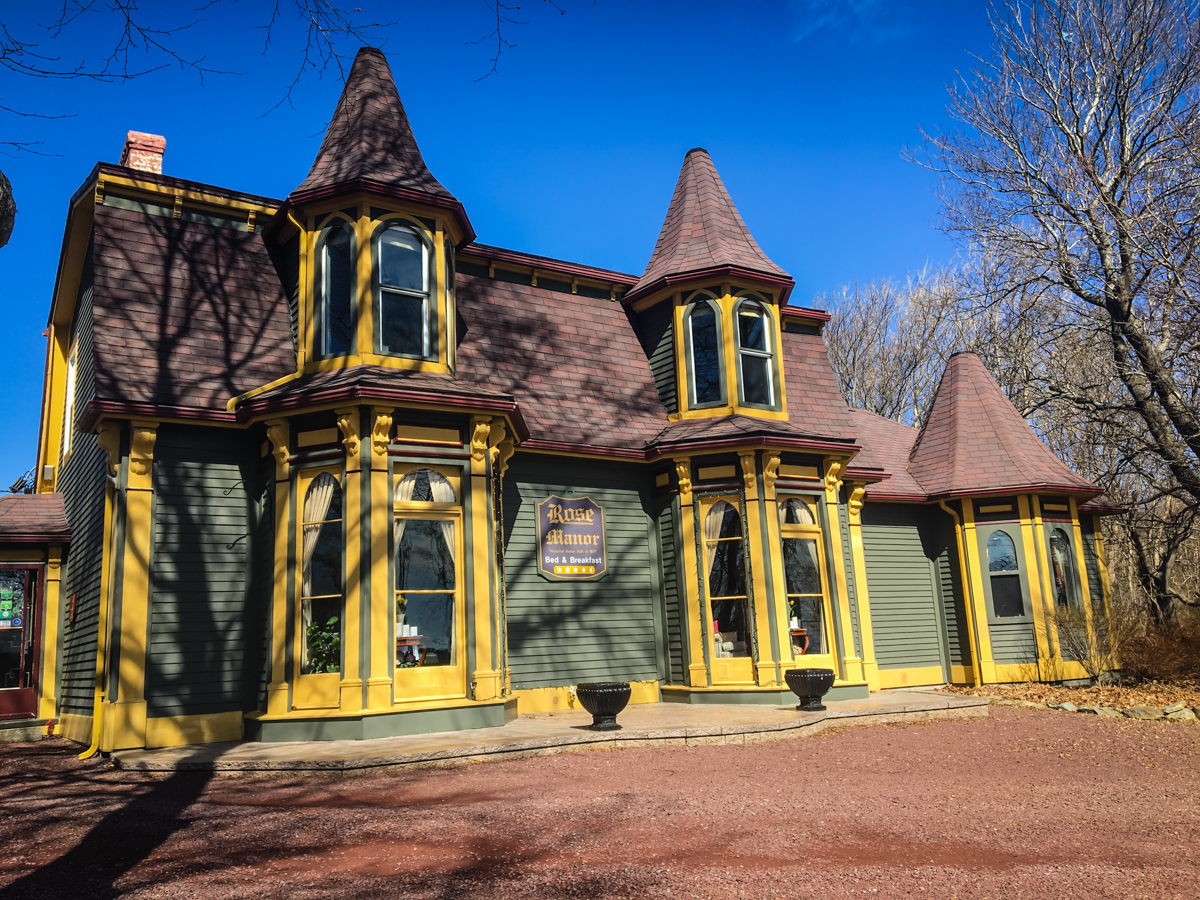
The house now serves as a bed-and-breakfast and event space, Belle View Manor Inn.

Sources & Further Information

Collins, Patrick J. Dr. Charles Cron: A Doctor for All Time, A Man Who Cured Our Hearts. Bowmark, 2010. Print.

Ball, J.M. Ten Historic Towns: Heritage Architecture in Newfoundland. Newfoundland Historic Trust, 1978. Print.

“Bennett, Thomas R.” Encyclopedia of Newfoundland and Labrador, 1981, pp. 177-8.