History of the Old Customs House: Origins of the Museum Association

gp473

The Conception Bay Museum Association Inc. was founded in 1970 for the purpose of preserving local history and assisting in the tourism potential in Conception Bay, one of the most beautiful and historic areas of the province. Opening a regional museum in Harbour Grace’s old Customs House and developing a ‘Historic Trail,’ from Brigus to Placentia, were the first steps of the committee’s five-year tourism plan for the region. In addition to the Conception Bay Museum, other sites on the Avalon peninsula provided the basic framework for the proposed ‘Historic Trail,’ such as Castle Hill National Historic Park in Placentia, the Heart’s Content Cable Office, the Fisherman’s Museum at Hibb’s Cove, Gull Gallery in Clarke’s Beach, and numerous other federal and provincial historic sites. Other plans included restoring the fortifications at Carbonear Island and establishing a sealing museum at Brigus.

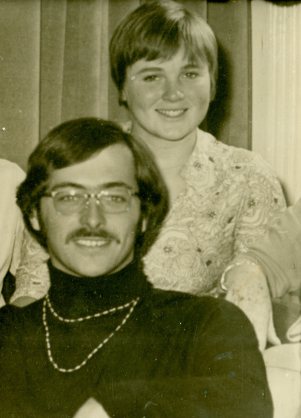
In spring 1973, the Committee on National Museum Policy granted National Exhibition Status to the proposed museum inside the old Customs House and provided financial assistance to prepare the building for various travelling exhibits. The building, owned by the provincial government, was given over to the control of the Conception Bay Museum Association to obtain funding and exhibition status. The provincial government completely rewired the building for the restoration, and the National Museum Policy Board in Ottawa offered $31,960 in 1973-74 for restoration and renovation; display and display equipment; lighting and display lighting; humidification and dehumidification systems; a new heating system; curator’s salary; and office supplies. With this funding, the committee set out to find a fulltime curator to oversee the renovations, set up the displays and promote the organization’s mandate. The committee soon found its ideal curatorial team: Jerome Lee—the son of Martin (“Mac”) Lee, vice-president and one of the driving forces behind plans for the Conception Bay Museum—and his wife Pamela Barton.
jeromepamelalee_1

Jerome Lee and Pamela Barton-Lee, ca. 1974.

Originally born in Placentia, Newfoundland, and Mississauga, Ontario, respectively, Jerome and Pamela first met at Glendon College, York University, and soon fell in love. In Toronto Pamela lived with eight other people in a cooperative setup, working to support herself at the Steak-n-Burger and volunteering with disabled children at Bloorview School. Jerome worked in a house established to help Atlantic Canadians having trouble in the big city. Together they travelled extensively in Europe, where they attended the University of Marseille, France. Upon returning to Toronto, Jerome enrolled for a year at Ryerson, studying photography, and Pamela took courses in Journalism.

The couple were offered the chance to move to Jerome’s home province in 1973, and on April 14, the two were married in a small ceremony in their living room. After celebrating they packed their Dodge camper van and headed for Newfoundland.

The couple and the committee’s volunteers soon got to work renovating the old Customs House and its neighbouring grounds. Pamela was largely responsible for the exterior plans of the museum and landscaping. These plans included fixing the two 1854 gas lamps to the entrance of the museum and installing the early iron water tanks in the park for the 1974 season. In the next phase of development, Pamela and the committee planned to construct a stone wall around the grounds, continue landscaping, erect several historic markers, and develop a walkway to nearby Colston’s Cove, where John Guy landed salt in 1612.

Jerome was engaged in overseeing the details of the interior renovations and organizing displays for the planned May 1974 opening. The completed museum was to feature refinished birch and the restoration of its grand mahogany staircase. Jerome’s friend Ron Smith, an interior decorator visiting from Toronto, helped paint the interior its blue and ivory colour scheme.

In the February 7, 1974, issue of The Compass, Conception Bay’s regional newspaper, Jerome outlined the plans for the museum: “The ground floor of the building is funded by the federal government’s National Museums as a National Exhibition Centre. The two rooms of that floor are being converted into galleries with complete environmental control: temperature, humidity and lighting. The walls are panels covered with Irish linen. They will provide a neutral backdrop for exhibits which will come from all over Canada. The travelling exhibits will cover a large range of subjects, including Science and Technology, History and the Arts. The National Exhibition Centre will give people in this area a chance to see some samples of the other cultures of the other nine provinces.

“The two rooms on the second floor will be reserved for local exhibits. Private collectors in the Conception Bay area will use the museum facilities to display their collections to the public. Local residents and tourists will have the chance to see any valuable articles from the past. At opening the exhibit on the second floor will be ‘Sealing in Conception Bay.’

“We are also hoping that the second-floor space will be used by local artists for contemporary arts and crafts displays. History can, perhaps, be brought to life if it is seen in relation to present day activity and contemporary art can also gain from the historical perspective.”

The young couple wanted the community to have a personal involvement with the museum, to feel they had an important role in its success. At the heart of their vision for the museum was to engage youth and the community through both education and culture. They hoped to conduct classes in both photography and crafting during the winter months, outside of the seasonal tourism industry.

Screen Shot 2019-11-24 at 12.13.57 PM

Screen Shot 2019-11-24 at 12.14.09 PM

Pamela Barton-Lee wrote a regular column for The Compass newspaper during her time in Conception Bay.

During the renovations, the two lived in Carbonear, where Pamela began work as a receptionist at The Compass. There she wrote her “MScellany” column, which focused on local, national and international women’s issues. The column was a warming dialogue with women in the area, urging them to shed some of their traditional, restraining customs.

In April 1974, Jerome and Pamela headed to Toronto on a mixed business and pleasure trip. Jerome’s friend Ron went with them. In Halifax, the three stayed with Jerome’s sister Dianne on the drive through. After eating breakfast with Dianne and saying their goodbyes, the three continued their journey on a foggy day in Nova Scotia.

Tragically, at around 11 a.m., their van collided with a parked truck—whose axle had broken the previous night—outside of Amherst, Nova Scotia, killing the three passengers. Pamela was in a coma for nine hours at Amherst Hospital before passing away. Jerome was 26, Pamela 24.

Funeral services for Pamela, Jerome and Ron were held on Tuesday, April 9, in Harbour Grace. The ecumenical service, representing the faiths of the decreased—Anglican, United and Roman Catholic—was held at the Cathedral of the Immaculate Conception, just down the road from their planned museum. The young couple were laid in a common grave at the Roman Catholic Cemetery in Harbour Grace. They would have been married a year only five days later.

Despite this tragedy and monumental setback, the committee pressed on with their plans for the museum opening, doing their best to implement Jerome and Pamela’s vision for the building. Instrumental in this work were Jerome’s parents, Mac and Marie Lee, who stepped in and completed the project exactly as their son and daughter-in-law had planned.

Screen Shot 2019-11-24 at 12.14.26 PM

A headline in The Compass advertising the museum’s opening, 1974.

On Friday, May 17, 200 delegates from the Canadian Museum Association’s 29th conference, held in St. John’s, came to Harbour Grace for the opening of the Customs House as a National Exhibition Centre. The four busloads of people were treated to a seafood luncheon and reception at the Harbour Grace Legion prior to the dedication ceremonies. At the reception, Mayor Ted Pike welcome the delegation and Bill Parsons, vice-president of the Conception Bay Museum Association, spoke on behalf of committee president Gordon Simmons. Parsons remarked on how pleased they were to host a national delegation and complete their first milestone: to have the old Customs House designated as Harbour Grace’s first museum. Parsons singled out Mac Lee and Gordon Simmons for their initiative and desire to see the building open for spring 1974. He also expressed his condolences to Mac and his wife Marie on the loss of their son Jerome and daughter-in-law Pamela.

Screen Shot 2019-11-24 at 12.14.43 PM

Robert Broadland reveals the National Exhibition Centre plaque, May 17, 1974.

At the old Customs House, Robert Broadland, member of the Consultative Committee on National Museum Policy, revealed the designation plaque on the building’s exterior. “I hope to God that the wind doesn’t take this away,” he said, laughing. Inside, Newfoundland artist George Noseworthy’s fifteen “rhythmics” were displayed on the first floor, with Stephen Racine’s Indigenous photography exhibit from Canada’s west coast, on loan from Ottawa’s National Museum of Man, on the second. In a letter of thanks to the Conception Bay Museum Association, Barbara Riley, an attendee from Ottawa, noted how “difficult it was to get everyone back on the buses…some delegates would have stayed taking pictures of Harbour Grace until the sun went down.” The new National Exhibition Centre hosted over 4,000 people during its opening season in 1974.

Though the National Exhibition Centre successfully opened in the old Customs House, the committee’s plans for local history exhibits were delayed until the 1975 season. In January 1975, the Local Initiatives Program (LIP), a federal funding initiative, granted $16,096 for six workers to upgrade the old Customs House, in preparation for a summer 1975 opening; and the National Museum Policy Board in Ottawa again offered the Association a sizable grant of $26,000 for 1974-75.
ga_frecker

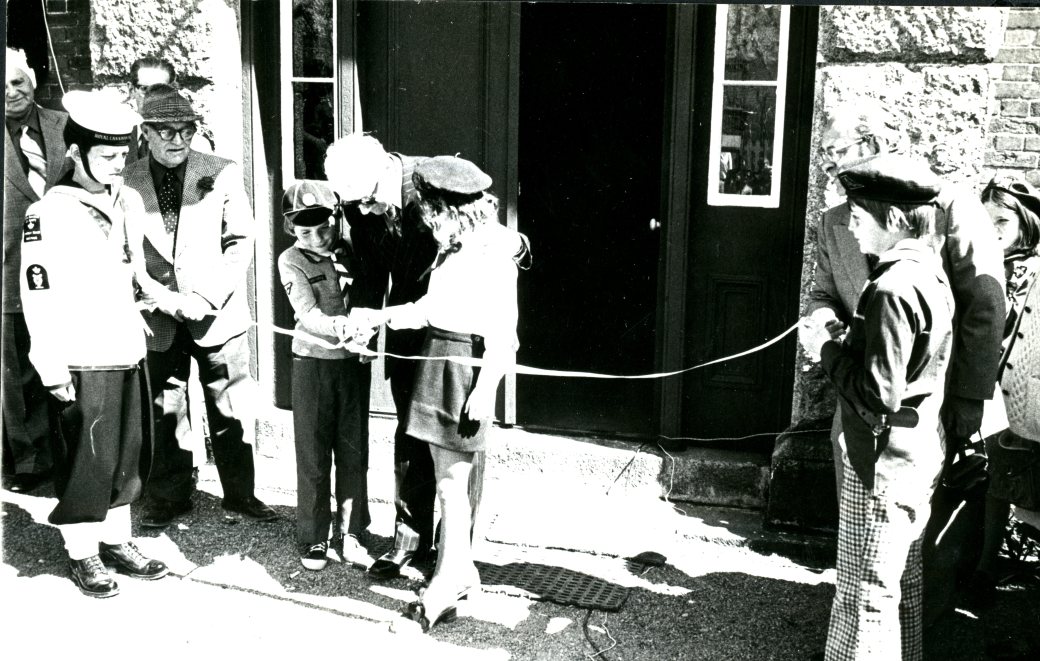
G.A. Frecker opens the Conception Bay Museum to visitors, June 14, 1975.

On Saturday, June 14, 1975, after five years of diligent work, the Conception Bay Museum opened its doors to the general public. Finally, the local history of Conception Bay would have a permanent showcase in Harbour Grace. New Association chairman Judge Rupert Bartlett and Mayor Ted Pike welcomed the gathered crowd. On hand for the opening was Dr. George Alain Frecker, then Chancellor of Memorial University and former Minister of Provincial Affairs in Premier Joseph Smallwood’s government. In his political role, Frecker offered early moral and active support to Gordon Simmons and Mac Lee, believing the region’s past was indeed worth celebrating. Although it was a happy occasion, Frecker spoke of Jerome and Pamela’s leading role, drawing a strong emotional reaction from those who knew the young couple.

haroldhorwood

Harold Horwood reveals his plaque, detailing the history of Peter Easton, June 14, 1975.

Well known writer and Confederation architect Harold Horwood was also in attendance. Horwood unveiled a plaque—his composition—detailing the legacy of “arch-pirate” Peter Easton in Harbour Grace. On the grounds, hoisted by students from St. Francis High School, a replica of Easton’s black pirate flag flew, alongside the flags of Conception Bay’s famous mercantile houses—the Munns, Ridleys, Jobs, Rorkes, and Bowrings. Jerome’s grandmother, Bride O’Keefe, sewed the flags for the occasion.

Inside, exhibits on local history were finally displayed to the public. On the second floor, the seal fishery exhibit envisioned by Jerome was proudly displayed, with items on loan from the Newfoundland Fur and Hide Co. For photography enthusiasts, the third floor displayed old archival pictures of Harbour Grace, taken long before the devastating 1944 fire, which forever altered the prominent downtown area of the community. During the 1975 summer season the local boy scout and girl guides clubs graciously volunteered their time to work as onsite interpreters.

Today, the Museum strives to implement the vision of its early founders, particularly Pamela and Jerome’s community-centred approach. As such, the Conception Bay Museum showcases the wider Baccalieu Trail region but recognizes the importance of Harbour Grace as its home base, where its biggest supporters lie. The aim for this building is not simply a museum but a cultural hub for the community, a place for locals to feel proud.

In recent years, with the help of committed volunteers, talented coordinators, and engaged student employees, the Museum has expanded its horizons. New programming has included book launches and signings; popular Halloween Haunted Hike fundraisers and heritage walks; a regularly updated website, database, and electronic archive; concerts at the church hall; scavenger hunts for children; and pub quiz nights. Television features on CBC’s Still Standing, UNIS TV’s Hors Circuits II, and in Newfoundland and Labrador Tourism marketing are recent highlights of the institution’s continued growth and regional importance. And in fall 2018, after partnering with the municipality and the provincial government, the Museum Board restored the Colston’s Cove Stairs, one of Pamela and Jerome’s first plans for the outside grounds.

Much has changed in the long 150-year history of this building and its 50 years as a museum. However, the building’s various historical uses showcase its longevity and importance in Harbour Grace. If volunteer enthusiasm is any indication—the Board of Directors currently welcomes 20 members—the Conception Bay Museum should be around for another 50 years yet.

Selected Founder Profiles

Martin (“Mac”) Lee

maclee_1

Born in Harbour Grace, Mac Lee left his hometown for the United States at the age of 15. He returned to Newfoundland in the early 1940s, working at the Argentia naval base in the department of public works, where he remained until returning to Harbour Grace in 1974.

Always very involved in public affairs, he was a founding member of the Placentia Area Public Library and the Placentia Area Historical Society. In addition, he was an active member of the Newfoundland Historical Society and Newfoundland & Labrador Historic Trust, of which he was awarded lifetime membership in 1973, in recognition of his services.

Though based in southeast Placentia for most of his later life, Mac was devoted to documenting and preserving the heritage of his hometown and region. He was a founding member and vice-president of the Conception Bay Museum Association; assisted with establishing the Bristol’s Hope Historical Society; and helped access funding to restore the historic St. Paul’s Anglican Church. Notably, Mac and his wife Marie took on the mantle of their son Jerome and daughter-in-law Pamela after their passing. Mac is often noted as the driving force behind the museum’s early success, despite tragic personal setbacks.

In 1974 he won an award from the American Association for State and Local History, for his “resourcefulness and devoted contribution to the preservation of Newfoundland history.” Presenting the award, Historic Trust president Shane O’Dea said, “There is virtually no one in Newfoundland who has been so devoted to the development of a sense of Newfoundland history and culture.” In 1976 Heritage Canada presented Mac with a prestigious award for his lifetime achievements and diligent work with the Conception Bay Museum Association.

Mac Lee passed away at St. John’s General Hospital on Tuesday, December 21, 1976.

“He was not an acquisitive man. He was truly the unbounded ‘free spirit’ whose affection and loyalty for this rock were as deep as any oak’s. He wanted fiercely that this rock and its inhabitants be better. And in many ways, because of him, we are and will be.

“The history that Mac Lee read, researched and preserved lives on. But what shines out through it all is the man himself. And that is the greatest heritage he gave us.” – Monsignor J.M. O’Brien, 1976

William (“Bill”) Parsons

billparsons_2

Born in Harbour Grace in 1907, Bill Parsons moved to St. John’s to work in a bank during the 1920s. In 1929 he returned in time for some of the first transatlantic flights, working as a stringer for the Associated Press (AP). Bill would send AP the flight crew’s time of arrival and departure, the type of plane, weather conditions, and any other pertinent information. His father, photographer Reuben T. Parsons, documented every arrival using a large-view camera with glass plates. However, the plates were too fragile for transportation to AP’s Boston office; so Bill took his own pictures on smaller Kodak film. The films were then rushed to Whitbourne, put aboard an express train ,and five days later would be in Boston for the papers. Many of the original photos taken by Bill and Reuben—including Reuben’s old pictures of Harbour Grace street scenes—still grace the Museum today.

For eight years he worked at the Newfoundland Trawling Co., located at the old Terra Nova Shoes site, and rose to the position of manager. In 1947 he left Harbour Grace again to work as a civilian at the American Air Force base in Goose Bay, Labrador, and returned to his hometown permanently in 1958. 

After retiring, Bill taught basic navigation, or coastal pilotage, at St. Francis High School and was an early member of the Conception Bay Museum Association. In 1974 he joined Mac Lee as joint vice-president, eventually becoming the Association’s director. 

Bill’s leadership and firsthand knowledge of important Harbour Grace events helped guide the Museum through its early years. He played an important role in gathering information and designing the Museum’s most popular room, the second floor ‘Aviation Room,’ with its collection of photographs—many of them Bill’s own—artifacts and primary documents, such as the Harbour Grace Aviation Trust Co.’s logbook. Robinson-Blackmore published his research and memories of the heyday of transatlantic aviation, The Challenge of the Atlantic: A Photo-Illustrated History of Early Aviation in Harbour Grace, Newfoundland, co-authored with Bill Bowman, in 1983.

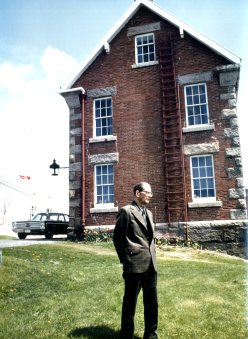
Gordon Simmons
gordsimmons_1

“I came to Harbour Grace as a young man to teach at St. Francis in 1965. Over the next thirteen years the town and Conception Bay North became an anchor in my life. I developed a great interest in the history of the town and, where I could, I tried to incorporate that history in subjects I was assigned to teach. And then I met Mac Lee, then living in the Lee house on Harvey Street. It would take considerable time to describe this extraordinary man, particularly to those who had never met him. It was through Mac that I met Gordon Simmons.

 If one wanted to describe the essence of Gordon Simmons, one need only read John Henry Newman’s essay on ‘The Definition of a Gentleman,’ which wonderfully describes Gordon. He was quiet in demeanor but always with a smile, kind word and gentle wit. He was a devoted reader, a collector of historical information and a promoter of Harbour Grace’s rich heritage. He was a dear friend of Mac’s yet in many ways the antithesis of the outgoing and restless Mr. Lee. They were a perfect duo to undertake, along with many others, the establishment of the Conception Bay Museum. It was Gordon who asked me to be a member of the committee, as young and as uninformed as I was. Just being asked by Gordon Simmons was privilege enough for me.

Though not the official secretary, rather the Chairperson, Gordon brought a studied commitment to the undertaking. He kept meticulous notes and preserved relevant historical material. (I don’t know what was the disposition of his personal papers; as well, I’m not sure what may still reside at the Museum.) He also encouraged me to consider initiating a Junior Historical group at the school to meet with older citizens of the area and record through audio-tape and written word their recollections on important elements of community history. (Sadly, those reports, however meagre and tentative, and once held in the school library, were lost in the fire of April 1973.)”

– Gerard “Ged” Blackmore, former Association member

The author would like to dedicate this piece to Dianne Lee, for kind words and encouragement. 

The Handley Page “Atlantic” at Sea Level

A symbol of man’s conquering of his earthly nature could be no better represented than by a man-made contraption soaring high above the ground, traversing whole oceans and unearthing the awe of all types of people. The British “Daily Mail” publication sought to make this a reality in the spring of 1919, offering £10,000 for any crew that could successfully complete a non-stop flight across the Atlantic Ocean in British-built, British manned, heavier-than-air machine. After the failed attempt by Harry Hawker and Kenneth Mackenzie-Grieve in May 1919, the path was clear for British Rear Admiral Sir Mark Kerr, a decorated RAF pilot from the first world war, and Major H.G Brackley to lead their crew on the daunting flight across the Atlantic, and claim the coveted prize.

Upon the crew’s arrival in Harbour Grace in June of 1919, the excitement was palpable. One can imagine a community that survived for all its previous generations on the abundance of worldly resources such as cod, seal, and lumber would be eager to witness the initiation of a new era, one spent exploring the skies. Kerr and Brackley determined that, given its proximity to Europe and favourable jet streams, Harbour Grace would best facilitate the treacherous Atlantic crossing. Indeed, once the land now known as “Saint Francis Field” was selected to be the crew’s point of departure, the community was unrelenting in its accommodations. Like firemen battling a raging blaze, farmers and fishermen alike uprooted sturdy fences, hacked through loose timber, disposed of awkwardly bulky rocks, and towed away entire houses to make space for the fabled flying machine. Reflecting the zeal with which the community was imbued due to this opportunity, almost no attention was paid to the fact that many families had owned and developed property on that field.


House Relocation for Handley Page Atlantic

House being relocated to make space for the Handley Page “Atlantic.”

Chosen to make the transatlantic flight was a model of the largest biplane in the world, the Handley-Page V/1500 bomber, this one appropriately called “Atlantic.” The plane was transported to Harbour Grace by sea, then by train, packaged in 105 crates that residents often joked could be used as houses, given their enormity. Weighing 14 tons and with a wingspan of 126 feet, the Handley Page “Atlantic” was massive. The hulking plane sitting on the makeshift aerodrome became known as “Handley Page on the Sea,” given its location parallel to Water Street and proximity to the sea. Not only was the Handley Page “Atlantic” sitting close to sea level on the aerodrome, but the residents of Harbour Grace would soon be the first to witness it traverse the skies from far below, at sea level.

Handley Page Atlantic

The Enormous Handley Page “Atlantic.”

The Handley Page On the Sea

The Handley Page “Atlantic” Taking off for its Trial Flight.

On June 10, the local Daily Star reported: “The horny handed fishermen-farmers watched with intense interest the huge bird-like machine passing gracefully overhead. Women and children left their dwellings, abandoned their work, and made their way to vantage points and watched the flying machine until lost to sight.” This was the Handley Page “Atlantic” on a trial flight to St. John’s and back, to test its fueling and cooling systems. The Daily Star also reported that the weather was perfect for viewing the plane from below, with clear skies and the sun beaming down onto Conception Bay. The experienced fishermen, hands damp from cleaning cod fillets, clothes rank with the stench of salt water, looked up to see the Handley Page “Atlantic” seemingly floating on the wind, just as their boats had done on the water for generations. The trial flight to St. John’s lasted approximately 25 minutes and was a success, however due to a deficiency in the engine cooling system, the crew of the “Atlantic” had to delay their flight across the Atlantic until new parts could be shipped to Harbour Grace from the United Kingdom.

Atlantic Over Hr. Grace

The Handley Page “Atlantic” over Harbour Grace.

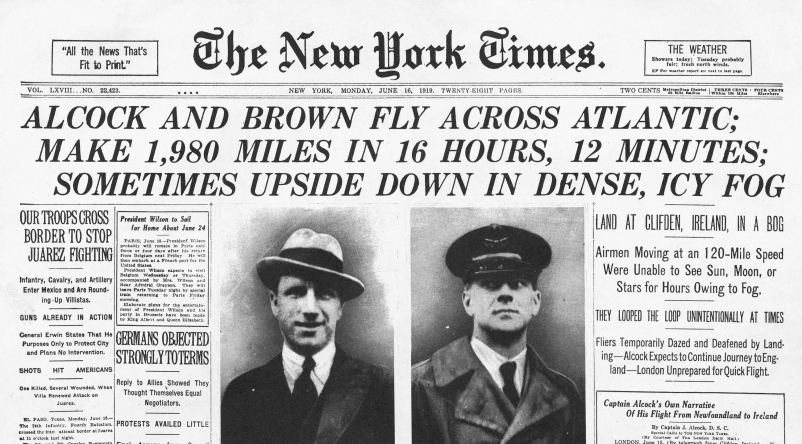
It was this delay that ultimately sealed the fate of the Handley Page “Atlantic” crew and finished the Daily Mail’s transatlantic flight contest, as on June 14, 1919, Captain John Alcock and Lieutenant Arthur W. Brown took off from Lester’s field in St. John’s and arrived in Clifton, Ireland, 16 hours and 12 minutes later. Journalists scrambled to confirm the landing, with many asking for hours whether the rumours of success were true. Once Alcock and Brown were confirmed to have reached Ireland, sentiments of jubilation emerged from across the Atlantic, with one journalist saying “Well, it must be something for a man in Ireland today to be able to say “Yesterday, when I was in America.”” With the residents of Harbour Grace disappointed given all they had done to facilitate the Handley Page “Atlantic” flight, Admiral Kerr sought to attempt the transatlantic flight regardless, but was ultimately convinced to tour the United States with the plane instead.

Alcock and Brown Cross Atlantic

New York Times Report on Alcock and Brown Successfully Completing their Transatlantic Flight.

On July 5, 1919 many in the community of Parrsboro, Nova Scotia were awakened by what was described as a “UFO.” In reality, it was the deafening rumbling of the engines on the Handley Page “Atlantic,” which was seeking to make an emergency landing in the middle of its journey to the United States. Fuel was running low due to strong headwinds and the crew of the “Atlantic” chose Parrsboro because it was the only community nearby with visible electric power. The locals frantically jumped in their Model Ts and sped to the local racetrack to light up a landing strip. It was the only flat piece of land without any trees. Sitting there in the cool summer morning, locals waited patiently for the Handley Page “Atlantic” to land. When it did, it collided with a barbed wire fence, ripping the fuselage and denting the propellers. This extensive damage required months to repair, during which Parrsboro experienced a surge in tourism, people determined to see an airplane for the first time traveled there in droves. According to locals, the roads were lined with cars; hotels and restaurants flourished, and news reporters were “everywhere.”

Handley Page Atlantic Downed in Nova Scotia

The Handley Page “Atlantic” after crashing in Parrsboro, NS. Residents look on in Model T Ford vehicles.

In October of 1919, the Handley Page “Atlantic” finally concluded its journey, reaching the United States and delivering the first ever air-mail parcel from Nova Scotia to the United States in the process. Due to additional damage, the US tour was cancelled, and the “Atlantic” was dismantled before being shipped back to the United Kingdom. Today, pieces of the Handley Page “Atlantic” are in various museums. At the Ottawa House By the Sea museum in Parrsboro for example, an original Handley Page “Atlantic” propeller boss, and the navigator’s seat, were presented during community festivities in July 2019. For more information on the unique story of the Handley Page “Atlantic,” visit the Conception Bay Museum.

Navigator Seat at Ottawa House Museum By the Sea

The Navigator’s Seat from the Handley Page “Atlantic.”

Ottawa House Museum

The Ottawa House By the Sea museum in Parrsboro, NS.


Authored by: Francis Finlayson

Sources:

Celebration of Handley Page

Boland, G. “Parrsboro’s connection to the Handley Page ‘Atlantic’,” Historic Nova Scotia, accessed June 29, 2020, https://historicnovascotia.ca/items/show/109.

Léger, K. “1919: A Year of Flying Firsts,” Halifax Public Libraries, Local History Blog https://www.halifaxpubliclibraries.ca/blogs/post/1919-a-year-of-flying-firsts/

Memorial University of Newfoundland – Digital Archives Initiative, http://collections.mun.ca/cdm/landingpage/collection/daily_star

Parsons, B. and B. Bowman 1983 “The Challenge of the Atlantic: A Photo-Illustrated History of Early Aviation in Harbour Grace, Newfoundland.” Robinson-Blackmore Book Publishers: Newfoundland.

Will, G. “2008 The Big Hop: The North Atlantic Air Race.” Boulder Publications: PCSP.

We’ve Made the Cornerstone Award Longlist

Image-1

We’re delighted to announce that the Conception Bay Museum (Customs House) has been longlisted for the National Trust for Canada & Ecclesiastical Insurance’s Cornerstone Award, in the ‘Resilient Places’ category.

This award recognizes Canadian places or landscapes that illustrate extraordinary resilience, significance, and benefit to a community over a sustained period of time, with a successful track record of 10 years or more.

To be longlisted for this award on the 150th anniversary of our building’s construction (1870) and the 50th anniversary of our Museum Association’s founding (1970) is an honour.

We’ll update our followers on the final results, to be announced at the National Trust for Canada’s annual conference.

View a listing of past award recipients here.

Tangible Ireland Presentation: The Southern Cross in Harbour Grace

The following was prepared by Matthew for the 90th Anniversary of the Southern Cross‘s flight from Portmarnock, Ireland, to Harbour Grace, Newfoundland, for a virtual celebration hosted by Oakland’s Tangible Ireland branch on Sunday, May 31, 2020. The visual slideshow for this presentation can be viewed here.

Southern Cross 1

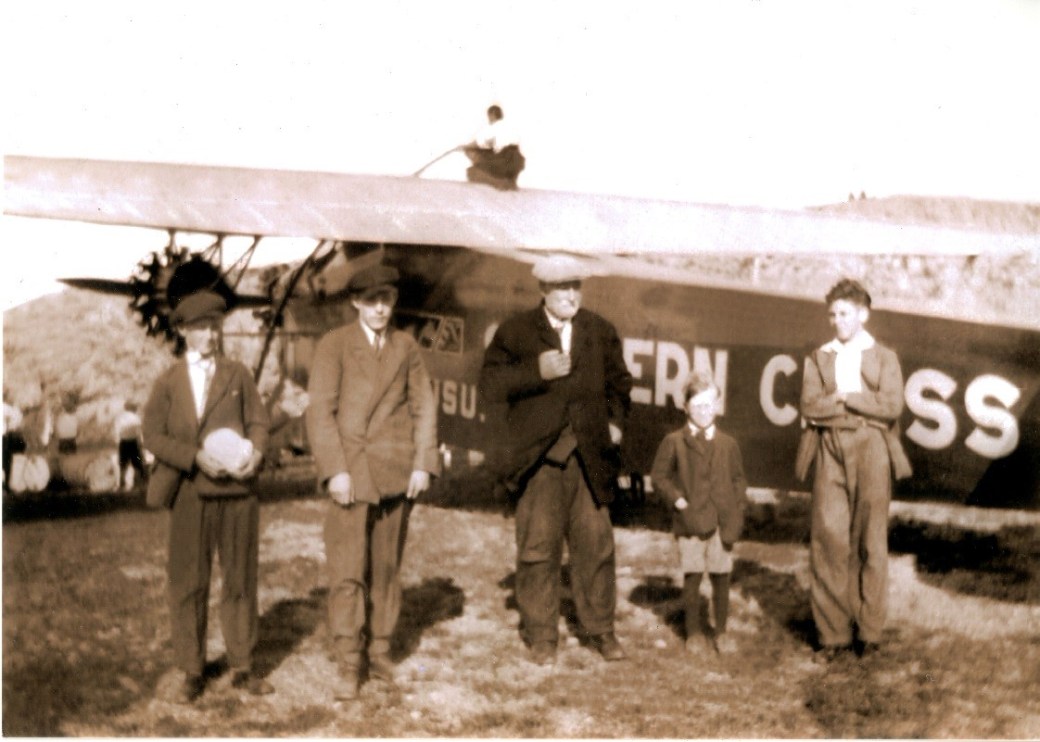
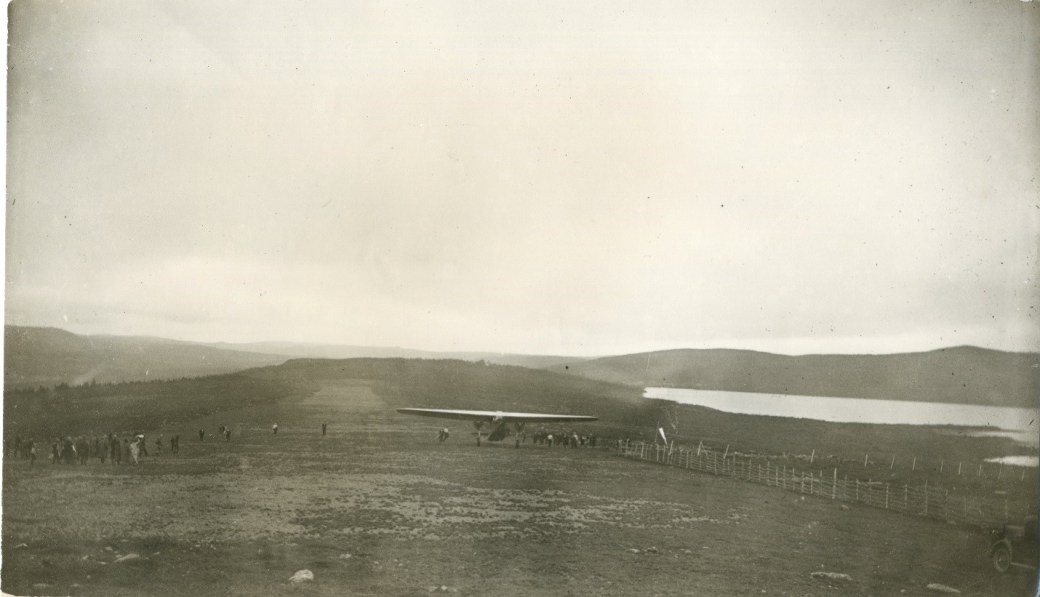
Figure 1: Southern Cross at Harbour Grace, June 25, 1930.

After leaving Portmarnock, Ireland, on June 24, 1930, at 12:57 NT, Capt. Charles Kingsford Smith (pilot), Capt. Everett Van Dyke (co-pilot), Capt. J.D. Saul (navigator), and J.W. Stannish (radio operator) hoped for agreeable weather and smooth flying to Roosevelt Field, New York, their anticipated destination for their east-west transatlantic flight in the Southern Cross. Heading for Cape Race, Newfoundland, on the Avalon peninsula’s southern extremity, the quartet anticipated turning southwest, flying down the coast of Maine, and landing at New York sometime around 11 a.m. NT on Wednesday, June 25.

The team sent hourly radio messages, updating operators and the public of their journey. At 2:45 a.m. NT, the first message reported them leaving the Irish coast. At 5:00 p.m. NT, Kingsford Smith noted their travelling speed—80 mph—and complained about the weather: “Everything going fine. Wish we could get out of this beastly fog. We feel closed in so much.”

However, the fog didn’t abate, and a change of direction was in store for the Southern Cross: a stop in Harbour Grace, Newfoundland, whose airfield, constructed in 1927 for the landing of the Waco Oil’s Pride of Detroit, would soon launch this rural centre into aviation lore. The Harbour Grace airport was operated by the Harbour Grace Airport Trust Co., an incorporated body of local citizens, and hosted 20 transatlantic flights in a nine-year period.

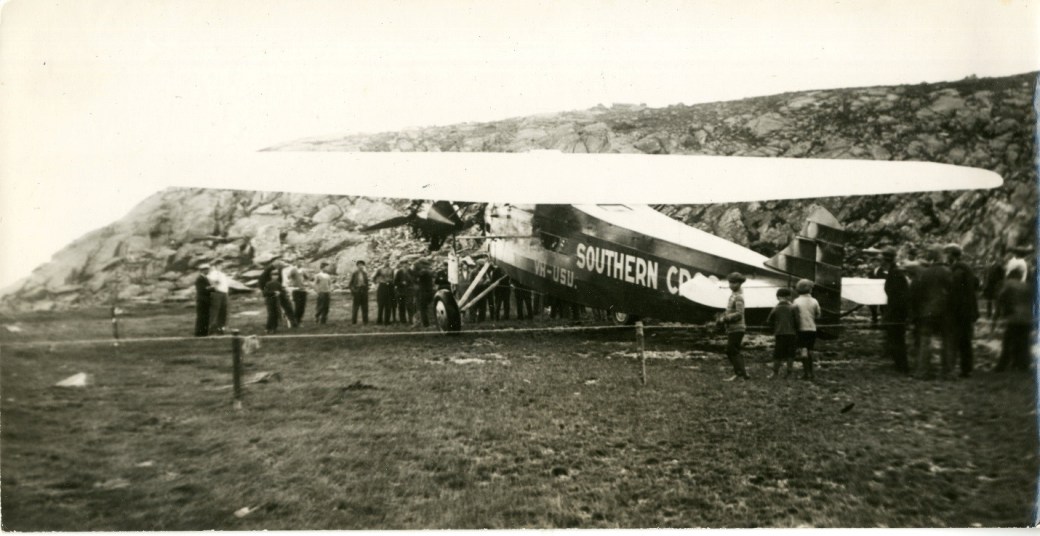
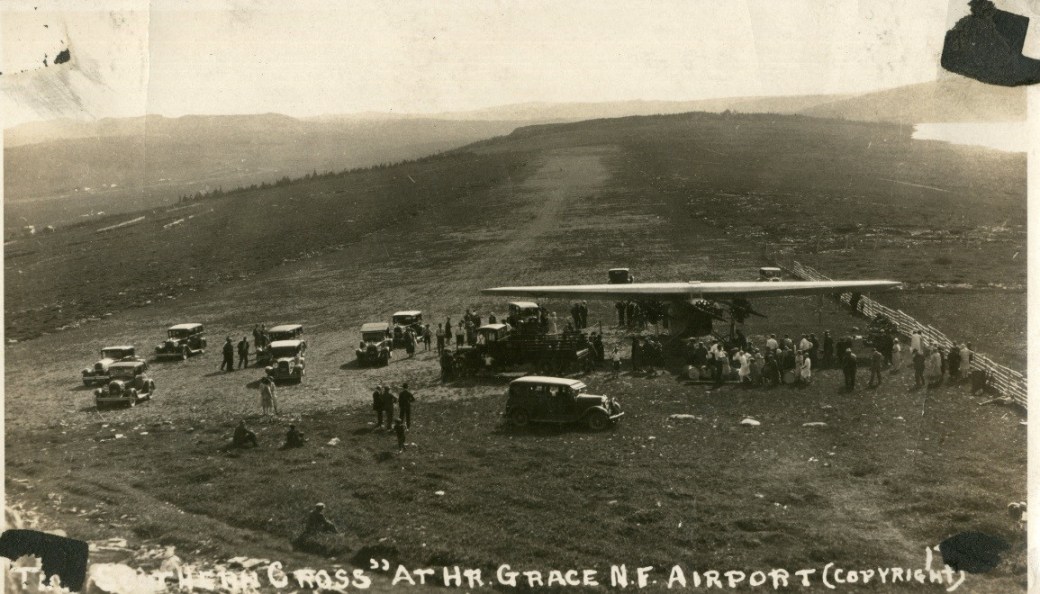
With their compass out of order and gas supplied dwindled, Kingsford Smith and crew notified Harbour Grace they’d be landing at the strip in the early hours of Wednesday, June 25. At 8:25 a.m. NT, the Southern Cross touched down safely on the coastal dirt strip—a perfect landing after 32 hours in the air.

southern cross 2

Figure 2: Southern Cross at Harbour Grace, June 25, 1930. Crow Hill in background.

News spread quickly of their safe arrival—another successful transatlantic flight for the history books. The crew reported excellent weather until nearing Cape Race—that blasted fog!—and were in light, easy spirits, despite being deafened by the plane’s roaring engines. The crew thanked their lucky stars for sound radio advice from the stations at Cape Race and Belle Isle and the coastal steamers which kept them notified of their position. The crew spent the night at Harbour Grace, lodging at the Cochrane House—the site of many overnighters and warm meals for transatlantic aviators—to enjoy their triumph and rest from their tribulations.

cochrane hotel 1

Figure 3: Cochrane House (also known as the ‘Cochrane Hotel’ and ‘Archibald’s Hotel’), pictured right, ca. 1930. This old hotel hosted numerous transatlantic aviators from 1927-36 and burned on August 17, 1944, during the third ‘Great Fire’ in the community. 

At daybreak on Thursday, June 26, Kingsford Smith and crew ate breakfast at the Cochrane House and headed to the strip with four vacuum bottles of coffee, boiled eggs, and sandwiches for the trip. Their next destination? Where they first intended to land: Roosevelt Field, Long Island, New York. After taxiing 150 yards up the strip, the crew left Harbour Grace, heading in a northwesterly direction. After a safe landing in New York, the crew received the traditional hero’s welcome—a joyous crowd, greets from City Hall, and guests of honour in President Hoover’s White House.

southern cross 3

Figure 4: Southern Cross at Harbour Grace, June 25, 1930.

southern cross 4

Figure 5: Southern Cross at Harbour Grace, June 25, 1930.

southern cross 5

Southern Cross taxiing at Harbour Grace, June 1930.

View the logbook entries (pages 35 & 36) in high quality here

COVID-19 Update from the Board of Directors

Due to the COVID-19 pandemic and restrictions for public safety, the Board of Directors of the Conception Bay Museum has had to make the decision to suspend daily museum visits and public events, such as hikes, for early summer. It would be very difficult to maintain distancing and follow health guidelines in our museum space or with many people on a hike. Research projects and other work will be ongoing throughout the summer, as we prepare for our next season as determined by the Dept. of Public Health.

We look forward to any new lifting of restrictions in the future so we can resume normal operations of the museum. We will keep the public posted.

Thank you for your interest and stay safe,

Board of Directors
Conception Bay Museum, Harbour Grace 

Photo of the Day: Sealers with View of Cathedral, ca. 1880s

gp464

Pictured: Two sealers with gaffs and rifles, walking on the pack ice at Harbour Grace, ca. 1880s. The first Immaculate Conception Cathedral is visible; the Cathedral burned in 1889. The cursive description on bottom reads: “Ice view – Cathedral in Back Ground” [sic]. Photo courtesy David Myrden.

Special thanks to David, who mailed this photo to our Communications Officer all the way from British Columbia.

View the picture in 1200 dpi here.

Colouring Sheet Challenge: Old Customs House

gp463
Stuck inside and looking for something to do? Here’s a colouring sheet, courtesy of director Jerome McCarthy, who sketched our museum in the 1990s. Our building, the old Customs House, is celebrating its 150th anniversary this year, and our Museum Association turns 50! Send us your completed colouring sheets on Facebook – we’ll post them on here!
 
Download the colouring sheet here.
 
Thank you to Jerome for releasing this sketch for public consumption. Also, thanks to Heritage NL & the Newfoundland and Labrador Historic Trust for the fun idea!

Employment Opportunity: Researcher/Writer (Young Canada Works, Dept. of Canadian Heritage)

Screen Shot 2020-05-22 at 10.24.00 AM

Summer Employment Opportunity, Conception Bay Museum

The Conception Bay Museum is an incorporated, not-for-profit tourism and heritage organization. Our mandate is to preserve and promote the history and culture of the Conception Bay North region. We are located in the Town of Harbour Grace and operate in close partnership with that Town.

We are seeking a Researcher/Writer for 35 hours per week at $11.40 per hour, for 9 weeks, to be funded under the Department of Canadian Heritage’s Young Canada Works (YCW) program.

We are looking for a motivated, enthusiastic summer student to do research on a predetermined topic, under the direction of the Executive Committee and the Curator of the Conception Bay Museum. The research should result in a fully edited, written, digital presentation (or paper), using a format designed by the Conception Bay Museum.

Qualifications & Experience:
• Experience with academic research.
• Strong computer skills (social media experience would be an asset).
• Strong creative and organizational skills.
• Able to work independently and/or as part of a team.
• An interest in our local history would be an asset.
• Able to work from home, using own computer, internet, etc.
• Able to provide an up to date RCMP Certificate of Conduct.

Deadline for Applications: Friday, June 5, 2020.

Please ensure that you meet the YCW requirements before applying. Visit the YCW site before applying: https://www.canada.ca/en/canadian-heritage/services/funding/young-canada-works/students-graduates/questions-students-graduates.html

Our Board ensures Covid-19 safety measures will be practiced and enforced. Please submit Resume, Cover Letter, and the names of three references to: Patrick J. Collins, Chair, via email: pjcollins@eastlink.ca

Please use the following subject title when sending applications: [YOUR NAME] – YCW APPLICATION – CONCEPTION BAY MUSEUM

Reign and Ruin: A History of Ridley Hall

Thomas Ridley (1799 – March 20, 1879)

ridley1

Figure 1: Thomas Ridley

Thomas Ridley came to Newfoundland to work for his uncle William Bennett, a merchant with premises at Adams Cove, Carbonear. By 1824 they had formed a partnership, Bennett and Ridley, which lasted until the late 1820s. Ridley, having married Margaret Harrison, daughter of a well-to-do Liverpool family, was joined by her relative Thomas Harrison in the firm of Thomas Ridley and Company, with headquarters at Harbour Grace but with stores as well at Carbonear and Western Bay. In spite of the fire of 1832, which destroyed much of Harbour Grace, Ridley built up a flourishing business. In the late 1830s Ridley established a partnership with Gilbert Henry Harrison and James Harrison—Ridley, Harrison and Company. After the death of Gilbert H. Harrison in 1849, this partnership was dissolved and Ridley took his two sons, Thomas Harrison and William, into the business as Ridley & Sons.

Several incidents in the 1830s, a decade marked by enmity between fishermen and merchants, show that Thomas Ridley was especially unpopular. In February 1832, after the sealers’ strikes and riots at Harbour Grace and Carbonear, every local merchant made concessions except Ridley. As a result, a mob of fishermen boarded and partially destroyed Ridley’s schooner, the Perseverance. In the 1836 general election, Ridley was forced to withdraw as the Conservative candidate because of violence and intimidation. Then in the Conception Bay by-election of December 1840, trying in his capacity as a magistrate to keep order, Ridley was hit over the head and nearly killed. The times, nevertheless, were changing. In 1842 Ridley was elected to represent Conception Bay in the Amalgamated Legislature. From 1843 to 1848 he also sat as a member of the Executive Council.

After the death of partner Gilbert H. Harrison, Thomas Harrison Ridley emerged as the most prominent member of the family. Ridley & Sons soon expanded and played a leading role, second only to that of John Munn’s firm, in the development of Harbour Grace as the commercial centre of Conception Bay. They set up a branch at Catalina, took part in the seal hunt, carried on extensive operations on the Labrador, and began to develop the winter codfishery at Rose Blanche.

Because of his wealth and power, Ridley and his family were involved with several “firsts” in Harbour Grace. In 1854 he was the first to use gas lighting, and in 1866 he was the first to use a steamship in the annual seal hunt. William Ridley was one of the founders of the Harbour Grace Water Company, the Harbour Grace Railway and the local grammar school.

In the fall of 1870, the news that Ridley & Sons were in trouble came as a shock both to their creditors and to the many fishermen depending on them for winter supplies. Despite efforts to keep the business going, Ridley & Sons were declared insolvent in 1873. They sold their Harbour Grace premises and several Labrador fishing rooms to the Munns and moved back to England, where Thomas Ridley died six years later in Upper Tooting, Surrey.

Thomas Harrison Ridley (? – 1904)

thomasharrisonridley

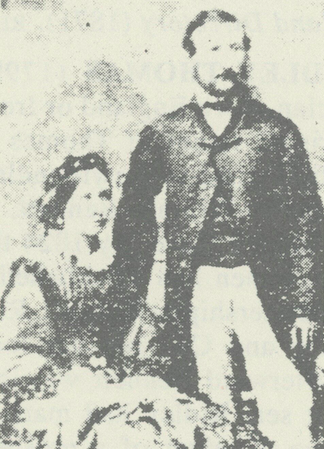
Figure 2: Thomas Harrison Ridley & wife

The son of Thomas Ridley and Margaret Harrison, Thomas Harrison Ridley entered the family mercantile business as a young man. In 1849, after the death of his father’s partner, Gilbert H. Harrison, he took over most of the firm’s day-to-day operations. Under his direction the firm of Ridley and Sons expanded from Harbour Grace to Catalina and Rose Blanche, and into the Labrador fishery. On February 19, 1858, he married Ms. Darling, niece of Charles Henry Darling, former Governor of Newfoundland. In 1866 he was the first outport merchant to use a steam vessel in the seal fishery. The following year he had two such vessels, the Retriever and the Mastiff.

Ridley’s political career began in 1855—the year of Responsible Government—when he was appointed to the Legislative Council. He resigned in order to contest a seat in the House of Assembly for the “Confederation election” of 1869 and was elected for Trinity Bay as a confederate. He resigned in 1871 to devote his time to the family firm, now facing bankruptcy. Three years later the firm went into receivership, the premises sold to John Munn and Company. Thomas Harrison Ridley left for England with his family (including his father). He died in London in 1904.

History of Ridley Hall (ca. 1834)

Ridley Hall, 1940

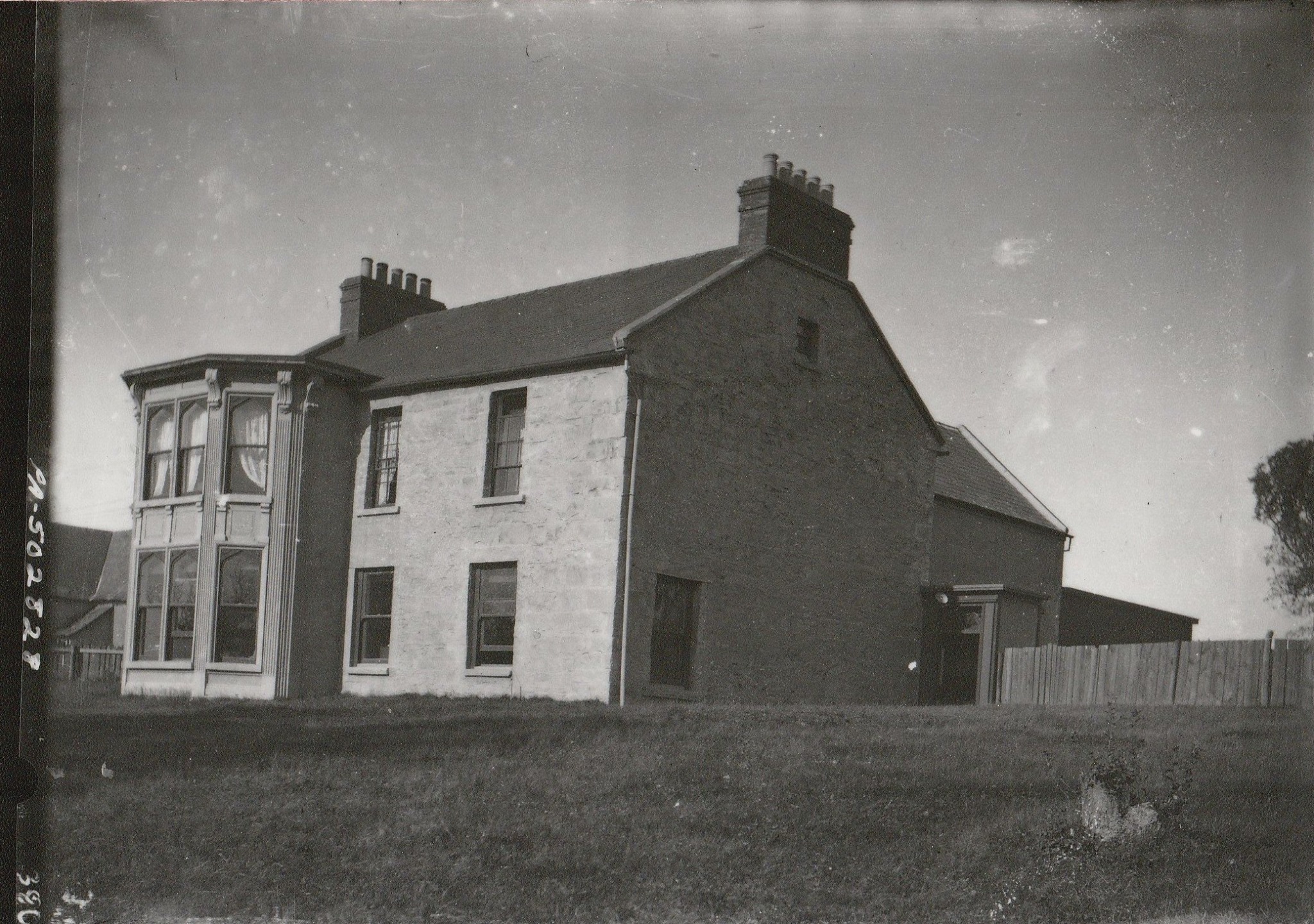
Figure 3: Ridley Hall, ca. 1940

Built for Thomas Ridley (Sr.) in 1834 and located amongst a collection of ornate mercantile houses, Ridley Hall was the centre of most of the social, political and economic activities in Harbour Grace. Once the “capital of Conception Bay,” the town was a bustling seaport, home to the most powerful trading firms outside of St. John’s.

Ridley Hall has historic value for its varied uses. Sometime after its initial construction, probably in the 1850s, a two-story frontal bay and a ballroom, the doors of which led to a series of formal English gardens, were added.

The aesthetic refinement of Ridley Hall matched the glamorous events often held on the property. One particular ball held by Thomas Harrison Ridley on Friday, August 10, 1855, was said to be the “certainly in every respect the most brilliant entertainment that has ever taken place in Newfoundland.” The Newfoundlander’s August 13, 1855, issue related the details of this noted event:

“Cards were issued to 200 people, but in consequence of the inclemency of the weather, the attendance was not much more than 100. There was, however, a dazzling display of rank, beauty, and fashion. His Excellency Governor [Charles Henry] Darling arrived from St. John’s in the steamer “Ellen Gisborne,” accompanied by his Private Secretary, the Honourable the Speaker of the House of Assembly, and other gentlemen, on Wednesday evening, to honor the occasion. The living tide commenced to flow rapidly to the point of attraction, shortly after 8 o’clock, and from that hour until morning, the rolling of carriages through the streets well nigh expelled slumber from every couch. To describe the appearance of the room (which was a temporary decorated pavilion erected for the purpose), densely occupied by many of the fairest of creation—their luxurious, yet tasteful dresses enhancing even the charm which nature had bestowed on them—their lovely eyes flashing not less lustrously than the rich chandeliers and gas lights with which the room was studded; the splendid uniforms of the military—the admixture of gravity and gaiety in the costumes of the gentlemen, et cetera—to do justice to these themes, I say, would require the aid of a more vivid imaginations than I can boast. But the Hon. Mr. Ridley can congratulate himself on a display which it would be vain to attempt to rival.

The supper, which was magnificent, both as to viands of the choicest wines of the purest vintage, was laid out in true artistic style by Monsiuer Toussaint of St. John’s, and the music was admirably performed by the Quadrille Band of the Royal Newfoundland Companies. After supper the gay dance was resumed and kept up with great spirit until morning, when the company, highly delighted with the enjoyments that had been prepared for them by their kind and hospitable host, began to depart.

On the following morning at 11 o’clock, His Excellency was waited on by a deputation of gentlemen of Harbor Grace, who presented him with the following congratulatory address, after which the Governor proceeded to board the steamer, “Ellen Gisborne,” accompanied by his suite, and a number of the ladies and gentlemen of the party, and took his departure for St. John’s amid the loud, long and hearty cheering of the loyal people of Harbor Grace, the band on board replying with that beautiful and appropriate Scotch air, “Auld lang Syne,” as the steamer glided gracefully from her moorings.”

To celebrate his son Thomas Harrison’s wedding to Ms. Darling, niece of Charles Henry Darling, former Governor of Newfoundland, Ridley held a grand reception, with a marquee tent on the lawn of the property. According to the local press, “arms were discharged and champagne liberally dispensed.” On August 2, 1866, another grand ball was held in honour of the representatives attempting to recover the Heart’s Content transatlantic cable. The ballroom addition at the rear of the house was used for this event. Daniel Gooch wrote of the party in his 1866 diary:

“Everything was now done to prepare to go and make the attempt to recover our lost cable. We had coal ships at Heart’s Content ready for us, and this had to be taken in. This occupied us until the 9th August. During this time our ship was a kind of open hotel; dozens of people came from various parts of Newfoundland and brought their bag[s] with them, quite looking upon us as a place where they might live at free quarters. Amongst them, however, were many very nice people from St John’s, and also from Harbour Grace; a Doctor and his daughter were friends of the Captain’s, and we saw a good deal of them. They sent the Capt a present of a young Newfoundland dog, 9 months old, born in Novr 1865. The Capt gave it to me and I was very pleased to have him. He is a beautiful pure blood Newfoundland, without a white hair upon him, and born of the same parents as the dog that was presented to the Prince of Wales. The breed is called the O’Sullivan breed. He & I soon became very fast friends and remain so. His name was given to him before I got him, it is Norval.

“Mr Ridley of Harbour Grace gave us a grand ball at his home. He put up a large timber ball room and did the thing exceedingly well. I dined and slept at his house. The road to reach this place from Heart’s Content was an awful one, the distance about 16 miles and time about 4 hours. He sent his carriage for us, or as many as it would hold. I fancied I never saw so many good-looking women in a room together before. A family at New Perlican, about 4 miles from Heart’s Content, were also very kind to us, of the name of Howley. I am sorry to hear he is since dead; he considered himself a large farmer, having about 25 acres of land under cultivation. Land here may be bought at 1s/- per acre, yet it is not cultivated; the fishermen never seem even to cultivate a garden round their cottages, altho’ they often have a great deal of time on their hands to spare.

“While we were at Heart’s Content the weather was very variable; when bright it was very hot, but the fogs and rain were cold. I scrambled about on the hills surrounding the harbour, but the thick scrub wood made it a very difficult task; but on the whole I very much enjoyed my stay there.”

An apocryphal story says a former King of Spain attended a ball at Ridley Hall. The estate held such preeminence in the community that sailors traditionally saluted on passing.

Ridley and Sons declared insolvency in 1873, and in late 1876 the Ridley Hall property was advertised for sale in editions of the Harbour Grace Standard. The property for sale was described as:

“[A] Dwelling House, with Conservatory attached, Stables, Coach houses, Ice-house, a large Lawn and Garden in front well stocked with Fruit and other Trees, two Kitchen Gardens and Meadows. [It] is well supplied with water, and extends from Water to Harvey St.”

1877 ad

Figure 4: Advertisement in the Harbour Grace Standard, March 3, 1877

John Munn and Company subsequently purchased the firm’s two landmark assets, Ridley Offices on Beach Hill and Ridley Hall on Water St. The house was later sold again after the disastrous Newfoundland Bank Crash of 1894 (Black Monday), when trade came to an abrupt halt; unemployment and destitution became widespread after two of the commercial banks of Newfoundland closed their doors and never opened again.

However, despite changes in ownership, Ridley Hall continued to be a cultural event space for the community. In June 1884, a successful fine arts reception was held at the Hall, attended by many of Harbour Grace’s “principal townsfolk,” who came to see the work Mr. Blanvelt’s art students. Blanvelt carried the exhibition over multiple days, letting people view the exhibition during the day and evening.

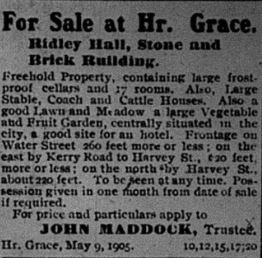
The house later became the property of Edward Quinton, who, in the early 1900s, sold it to John Maddock, an English-born businessman who operated a general cash and supply business in Harbour Grace. In his retirement he spent his time looking after renovations at the Hall but put the property up for sale in 1905. Advertisements in the Evening Herald in spring 1905 describe the property as:

“Ridley Hall, Stone and Brick Building. Freehold property, containing large frost-proof cellars and 17 rooms. Also, Large Stable, Coach and Cattle Houses. Also a good Lawn and Meadow, a large Vegetable and Fruit Garden, centrally situated in the city, a good site for a hotel. Frontage on Water Street 260 feet more or less; on the east by Kerry Road to Harvey St., [?]20 feet more or less; on the north by Harvey St., about 220 feet…”

1905 ad

Figure 5: Advertisement in the Harbour Grace Standard, May 18, 1905

Dr. C. Alfred Ames subsequently purchased the property from Maddock around June 1905. In a piece in the Evening Herald on July 5, 1905, a traveller notes that Ames had purchased Ridley Hall and was renovating it. The traveller remarks that if Ridley Hall “had been taken over by a company and converted into a model hotel, it with its grounds and surroundings, would have made an ideal one and the many inducements afforded tourists, would be the means of bringing many tourists here who now do not come owning to the fact that hotel accommodations cannot be had.” Throughout 1905 and 1906, Ames’s clinic information was advertised in the Harbour Grace Standard, operating from 9 a.m. – 11 a.m. and from 4 p.m. – 6 p.m. at Ridley Hall.

The estate’s next incarnation was as a cable station in Harbour Grace. In the 1870s, the Direct United States Cable Company (Direct Cable) considered landing its transatlantic cable in Newfoundland. However, with the Anglo-American Telegraph Company’s monopoly on the island, Direct Cable had to settle for splicing their cable, attached to a buoy in Trinity Bay. After Anglo-American’s monopoly expired in 1904, Direct Cable decided to take advantage of the shorter transatlantic distance, transferring their western terminus from Halifax, Nova Scotia, to Harbour Grace, Newfoundland. In April 1910 Mr. Fenn, superintendent of Direct Cable, purchased the Ridley Hall property from Mr. D. Munn on behalf of the company. Part of this purchase included a section of beach property formerly occupied by a cooperage, where the cable landed and connected with Ridley Hall (see figures 6 & 7 below), the new cable station and office. On August 3, 1910, the SS Colonia diverted the company’s 1874 Ballinskelligs, Ireland, cable to this new location. By terminating the western end of its cable in Newfoundland rather than Nova Scotia, the company doubled the speed of their telegraph transmissions, thus allowing twice the number of messages to be carried.

Colonia

Figure 6: SS Colonia landing the cable at Ridley Hall, August 3, 1910


landingcable1

Figure 7: Landing the cable at Ridley Hall, near the former beachfront cooperage, August 3, 1910

At Ridley Hall, the cable offices were located on the first floor, with the manager’s office and quarters upstairs. The station operated only one cable and was staffed by approximately dozen employees, including a manager and three engineers, who rotated from Direct Cable’s English offices on a three-year basis. Mr. T. Gothorpe was the first manager of the Harbour Grace cable station and lived there with his family. However, Ridley Hall continued to be a place of arts and culture in its days as a cable station. For instance, the Harbour Grace Standard records how Mrs. Gothrope once invited “the book club and a few others” to hear Mrs. Ronald Kennedy read “a paper descriptive of the Passion Play at Oberammergau.”

Digging cable to RH

Figure 8: Digging the underground cable to Ridley Hall, 1912

In 1912 Western Union consolidated its Conception Bay operations and connected the Harbour Grace station with Bay Roberts’ station via an underground cable, which landed near Bears Cove Bridge, in Harbour Grace’s east end, and was trenched to Ridley Hall (see figure 8). Gothrope and his family subsequently moved out to make room for the increased number of instruments required to work the extra cables. The Harbour Grace operation was later transferred to Bay Roberts but started again at Ridley Hall in spring 1919, under the watch of new superintendent Mr. T. Bellamy. The Evening Telegram of April 28, 1919, relayed this move in a short piece, noting the “magnificent property [Ridley Hall] is[] surrounded by beautiful gardens, and sufficient land to produce sufficient potatoes, turnips, vegetables, etc., for the operators and their families.”

After the Newfoundland government contracted Commercial Cable for its off-island telegraph business, the British government’s “All Red Route”— the policy to connect their expansive empire through British-owned telegraph facilities, in the event of international strife—was in jeopardy. To strengthen its control, in 1920 the British purchased Direct Cable, operators of the Harbour Grace station and the transatlantic cable. The landline arrangement between Harbour Grace and Bay Roberts was later discontinued, and Harbour Grace operated its transatlantic cable in competition with others. In 1922 the company transferred the eastern end of the cable from Ireland to Penzance, Cornwall, England.

2009995

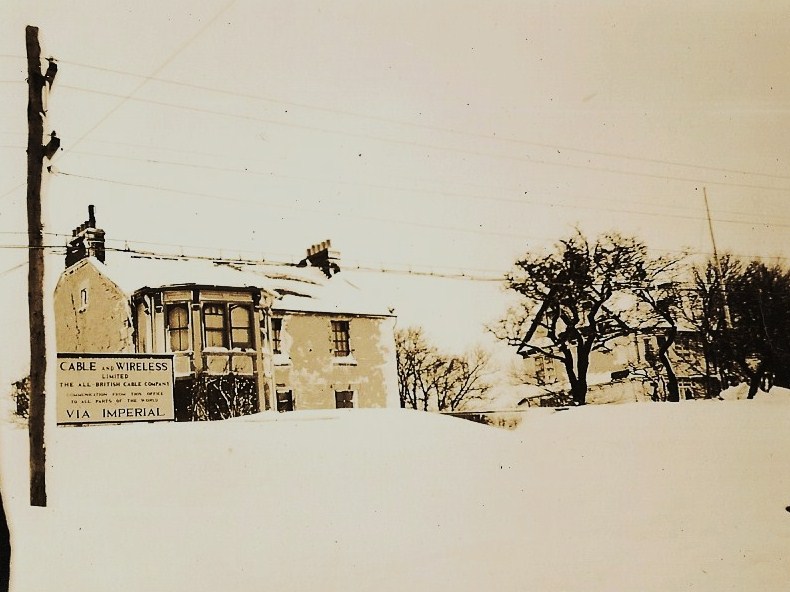
Figure 9: Ridley Hall (“Electra House”), property of Cable and Wireless Ltd, ca. 1934

In 1929 the operation became part of Imperial and International Communications Company. In April 1931 Mr. A. Pierce replaced Mr. H. Hinton as the new operating manager of the Ridley Hall cable office. The Company later took the name Cable and Wireless Ltd in 1934. The Company officially named Ridley Hall “Electra House,” though the building was commonly known as just “the cable office” by residents. After Confederation in 1949, the Canadian Overseas Telecommunications Corporation (COTC) acquired the assets of Cable and Wireless. In 1949 the European terminus was transferred to nearby Porthcurno, Cornwall, England.

On August 17, 1944, Ridley Hall barely survived the third ‘Great Fire’ of Harbour Grace. The fire destroyed a large part of the business district and many residences in town. The fire started about half a mile east of the cable station, but high winds carried embers for miles around. Mr. F.G. Webster and his staff, including several carpenters and soldiers employed at the building, put out the fires in and around the property. The tar roof was vulnerable to fire and was covered with lime and other fire-retardant material. The day was particularly grievous for Franklin P. Legge, who injured himself when a wall collapsed at the station; his house and possessions were also burnt. In a letter to the Chairman of Cable and Wireless, R.E. Smith, Douglas M. Burke, Eugene J. Farnham and C. Pike were singled out for their brave efforts to save the building from destruction.

Officers

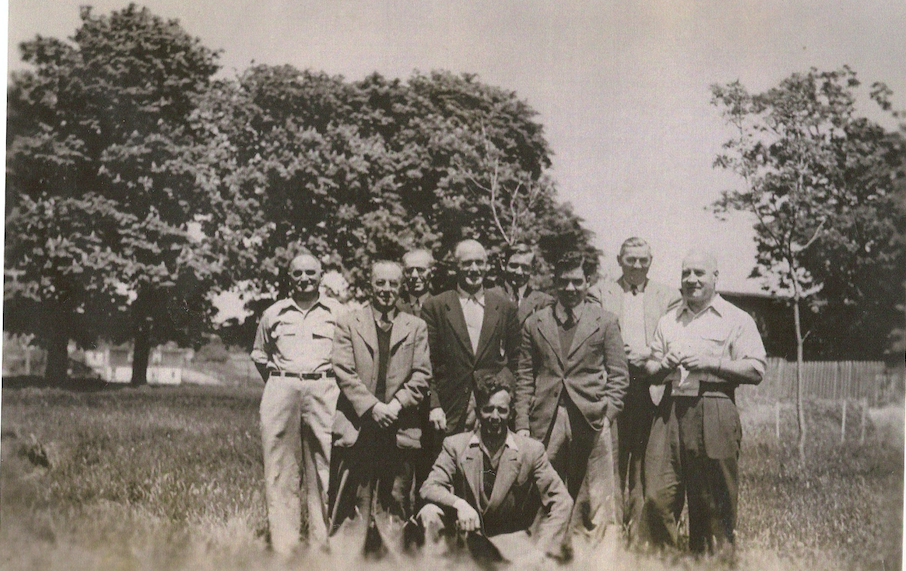
Figure 10: Cable workers at Ridley Hall, ca. 1947. Pictured: Back row: Eugene J. Farnham, Franklin Legge, Neil Legge, Harry Jones; Middle row: John Eades, R.V.C. Middleton (manager), Douglas M. Burke; Front row: Basil E. Martin and his Jack Russell Terrier, Spinx


screen-shot-2020-12-17-at-3.16.35-pm

Figure [–]: Cable officers at Ridley Hall, ca. 1947. Back, from left: Franklin Legge, Coe, Harry Jones, [–] Ryde, [–] Downer, Chrispin, Eugene J. Farnam, Douglas M. Burke. Front: Basil E. Martin.

A year earlier, in 1943, the company’s transatlantic cable had developed problems and could no longer be used. Despite World War II raging in the Atlantic, attempts were made to repair the cable, with no results. Cable and Wireless instead continued to use the Halifax cable for telegraph business. In 1951 the company made another serious attempt to put the transatlantic cable back online. Due to seven years of neglect, the needed repairs were extensive. The 8,050-tonne H.M.T.S. Monarch and C.S. Lady Dennison Pender surveyed the condition of the cable and fixed any outstanding breaks. However, the ships discovered an 800-mile gap in the cable, which had to be completely replaced approximately 218 nautical miles from Harbour Grace, 1,134 nautical miles from Porthcurno. As well, 400 nautical miles of the Halifax section of the cable needed repair. In total, the repairs cost $5.3 million.

Screen Shot 2020-12-17 at 3.17.16 PM

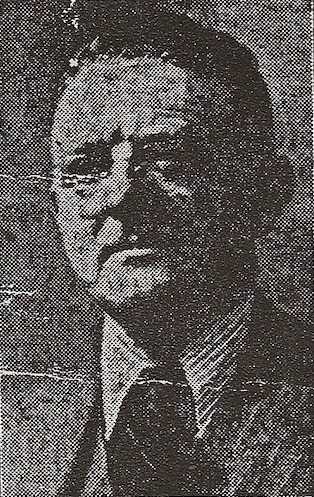
Figure [–]: R.V.C. Middleton, 1947.

In an Evening Telegram profile dated September 30, 1947, R.V.C. Middleton is listed as the Cable and Wireless manager-engineer in Newfoundland. Middleton had previously served in “Portugal, Gibraltar, Malta, Aden, Zanzibar, Mozambique, Bombay, Madas, Portuguese West Africa, Durban, Ascension Island, Seychelles, Port Said, and Cairo.” This frequent movement of telecommunication staff, recruited in England, was to ensure senior managers and engineers had a wide and varied experience in all branches. During this time, the assistant engineer at Harbour Grace was E.P. (John) Eades. Eades, trained also as a radio engineer, served in England, Bermuda, and Jamaica before coming to Newfoundland. The remaining staff at Ridley Hall were Newfoundlanders, the policy of Cable and Wireless being to employ local men wherever possible and encourage them to qualify for high grades in the service.

Screen Shot 2020-12-17 at 3.15.47 PM

Figure [–]: Ridley Hall as Cable & Wireless Station

The 1949 Cable and Wireless Schedule of Properties gives a useful description of the building post-fire. The cable office with manager’s flat was valued at £1566. It was described as having 2 bedrooms, 3 servants’ bedrooms in attic–a total of 10 rooms including kitchen and bathroom. The manager was the only resident and there were 5 local clerks. The cable hut had been built of concrete in 1936 and was valued at £78. The total land amounted to 3 acres.

Cable and Wireless’ property in Harbour Grace had various uses through the years. Notably, they let a field to the Hockey Association and for grazing. Between 1943 and 1945, the navy had a lease for an ice hockey rink, but this reverted to the Ice Hockey Association on January 1, 1946. In 1947 R.V.C. Middleton signed an agreement which permitted the Harbour Grace Ice Hockey Association the non-exclusive use of the field at a nominal rent of $1 per annum, to be paid in advance.

The Monarch laid the new cable in the summer of 1952, and on August 6 communications were re-established between Harbour Grace and Porthcurno for the first time in nine years. The staff then included C.H. Ryde (manager), Doug M. Burke, C.J. Coe, G.C.R. Downer, Eugene J. Farnham, J.H. Jones, Franklin P. Legge and Basil E. Martin.

By August 21, 1952, the Monarch had repaired and replaced the Halifax cable, re-establishing that part of the circuit. After a long period of intermittent service, the Harbour Grace cable station was in full operation once again. However, for efficiency reasons, the station’s operations moved to St. John’s. Burke took over as acting manager and oversaw the closing of the Harbour Grace office in 1953, when COTC moved the cable terminus to St. John’s.

IMG_0542

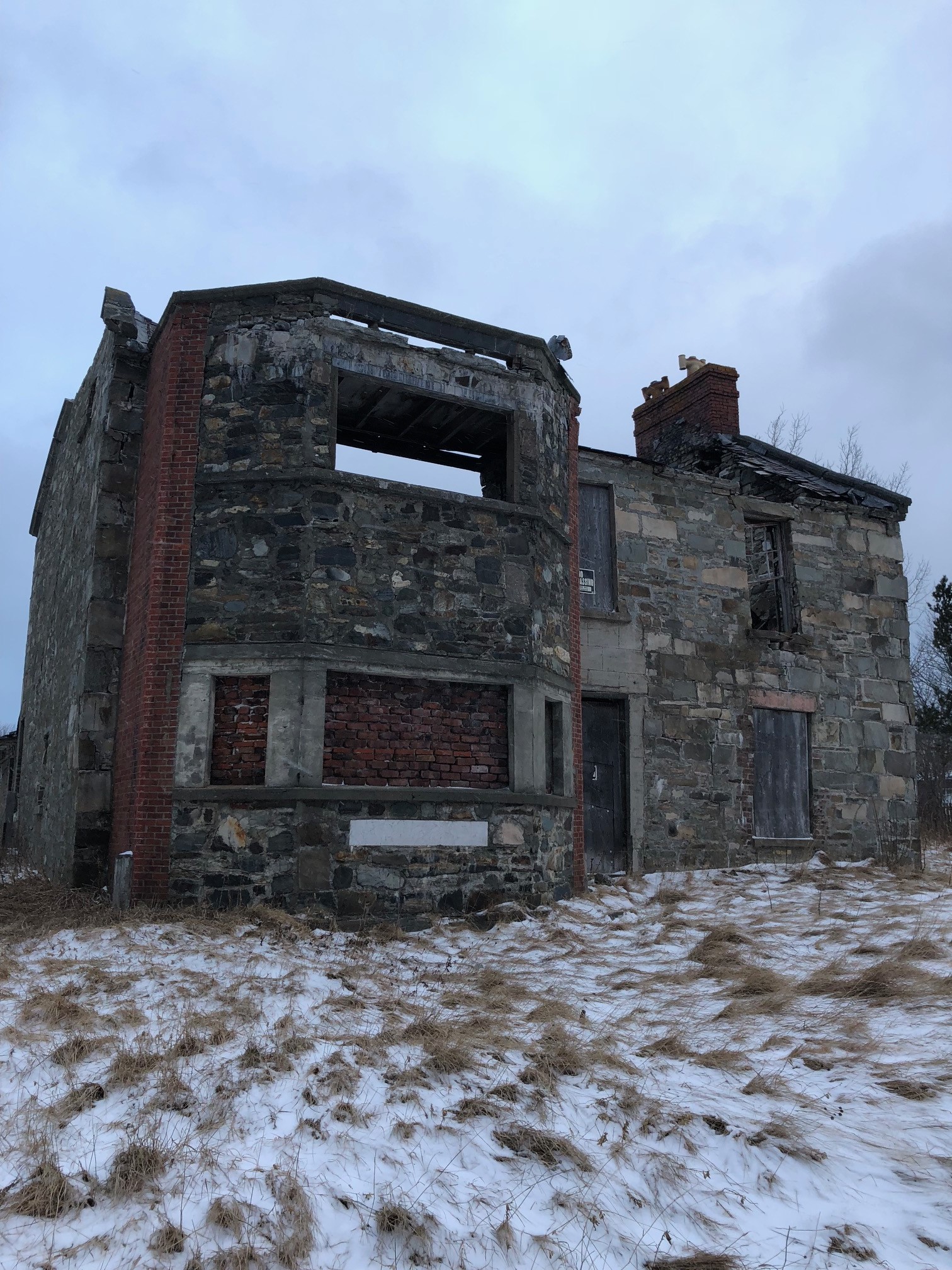
Figure 11: Ridley Hall ruins, 2018

On November 19, 1954, the cable office was sold to Harry Archibald, of Harbour Grace, for $7,500. Archibald and his family used the building as a residence. After Archibald’s death, his son Howard lived there until October 1991, taking on necessary repairs and altering the extended bay window addition. In 1993 the building was sold to Sheila Hendrigan and stood vacant for years, eventually falling into disrepair. In 2000 Brian and Jean Flanagan, originally of Harbour Grace, purchased the Hall with intentions to restore the building as a summer home. The Hall was extensively damaged when fire struck in 2003, resulting in today’s stone ruin.

In recent years, stories have circulated about hauntings at the ruins and how, in Ridley’s day, the Devil created a large lump in the cellar when attempting to reach the world of the living. Any evidence of this supposed “devilish lump” has since disappeared.

Discussion of Significance

mc049

Figure 12: Ridley Hall, ca. 1999

Ridley Hall has provincial historic value due to its profound impact on the social, cultural, political and economic development of Harbour Grace, the “capital of Conception Bay.” Of the many stone structures in Harbour Grace, Ridley Hall is the only remaining stone building of a mercantile family and conveys the economic might of local elites in commercial rural centres. Though the residence of one family, the building had a large presence in the community: in its heyday, it was a place where grand wedding parties were held and where visitors, depending on their status, would be feted by the Ridleys, then one of Newfoundland’s most powerful merchant families, with substantial interests in maritime areas of the island’s trade and industry, particularly the seal hunt. When the Ridleys declared bankruptcy, the house remained a hub for cultural gatherings, a place where visual art shows, boys’ choirs, plays and book clubs were hosted.

Conversely, Ridley Hall’s prominence had a powerful symbolic affect on the working-class population of the Harbour Grace and Carbonear. Despite deferential gestures—the saluting of Ridley Hall—Thomas Ridley was assaulted and castigated multiple times during the pugnacious 1830s, when sealers’ strikes and violent political actions seemed to follow the merchant everywhere. Merchant homes seemingly represented the stark class divide in workers’ hearts and minds. For instance, when the 1832 striking sealers beckoned their demands, they paraded through the streets of Harbour Grace, halting in front of each merchant house to call out their agreement. Each merchant agreed to the terms in turn; and each agreement was saluted with a cheer and the men moved on. As the prime figure of the sealers’ ire, Ridley would have been visited too. Similarly, in the 1836 general election, Ridley was forced to withdraw as a candidate because of violence and intimidation. Then in the Conception Bay by-election of December 1840, while trying in his capacity as a magistrate to keep order, Ridley was hit over the head and nearly killed. Agitators knew where the community’s powerbrokers lived, and a nighttime visit from a baying mob wasn’t an uncommon occurrence in early-nineteenth-century Harbour Grace. For such reasons, Ridley Hall represents two sides of the mercantile, elite establishment of Newfoundland: often involved in charitable works and the betterment of their communities, merchants also provoked strong responses from ordinary citizens, whether they were workers or voters. Deference or revulsion could be reasonably expected, depending on whom you asked and when.
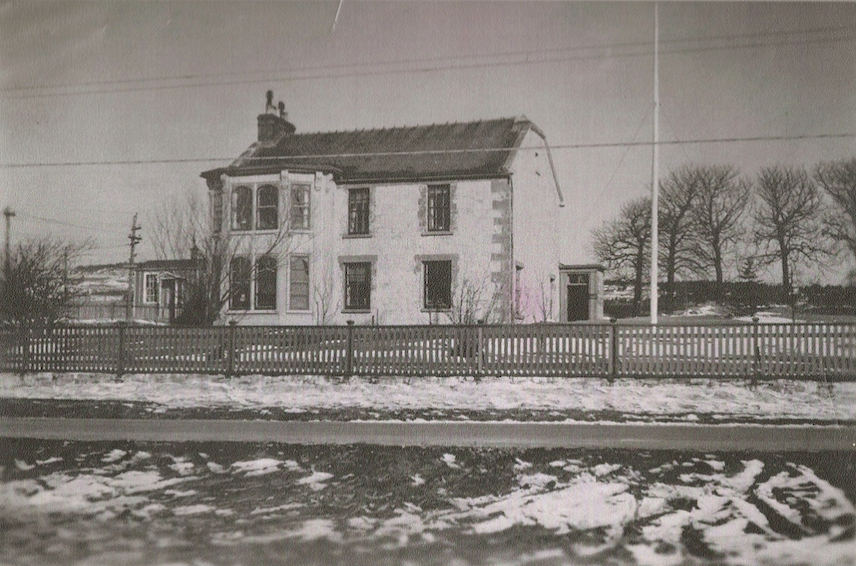
As mentioned above, Ridley Hall played an important role in the transmission of transatlantic communications—an oft-forgotten fact when people remember the building today. The cable station was a significant enterprise in the first half of the twentieth century and provided employment to many cable operators through the years. Sadly, other historic cable operations in Heart’s Content, Bay Roberts and St. John’s are remembered through the restoration of their buildings for contemporary uses—a provincial historic site in Heart’s Content; an art gallery, museum and town hall in Bay Roberts; and a world-class restaurant in downtown St. John’s—yet Ridley Hall remains a literal shell of its former self, despite the site’s potential.

mc046

Figure 13: Harbour Grace Registered Heritage District sign, 1999

Today, Ridley Hall’s value lies in the remnants of the once-imposing dwelling house and the history that was made there. Set upon a large plot of land, and within the Harbour Grace Registered Historic District, the ruins occupy a prominent area of town that can clearly be seen from the ocean, directly across the street. Because of its strong sense of permanence, the building acts as a marker, both in the landscape and memory, capturing the timeless spirit of old Harbour Grace.